SLEEP HYGIENE TIPS PDF: THE ONLY CHECKLIST THAT ACTUALLY WORKS
Roon Team
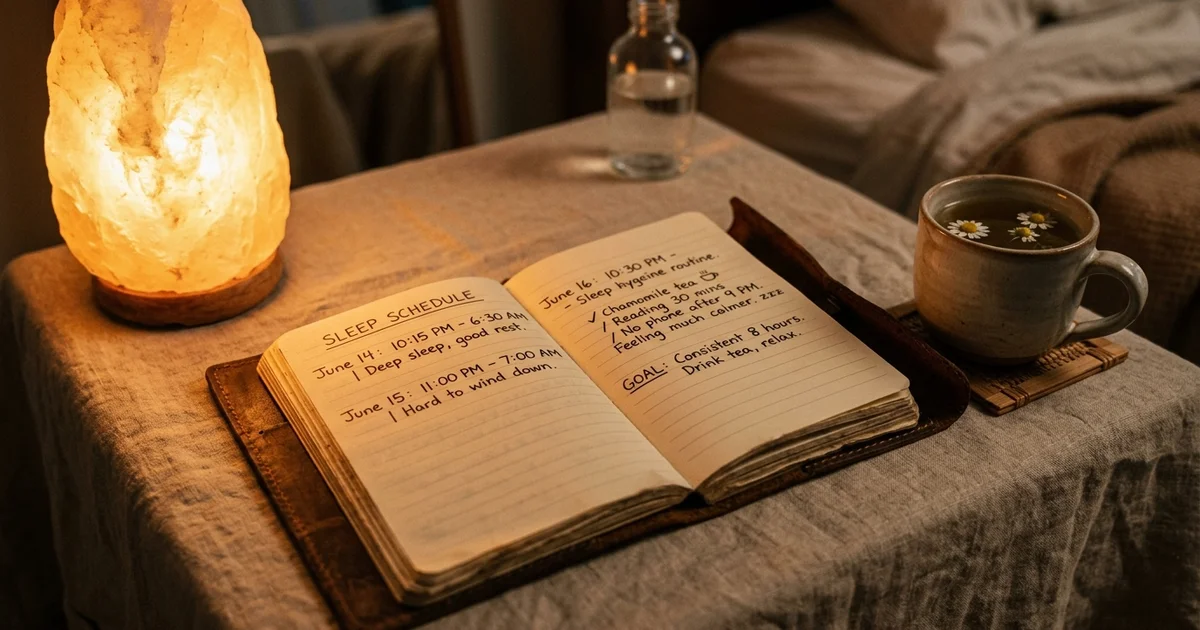
Sleep Hygiene Tips PDF: The Only Checklist That Actually Works
One in three American adults gets fewer than seven hours of sleep per night. You've probably seen that stat before. You may have even Googled "sleep hygiene tips PDF," hoping to find a neat checklist that fixes everything. Here's the problem: most of those PDFs recycle the same five bullet points, stripped of any context about why they work or how to actually stick with them.
This guide is different. Think of it as the last sleep hygiene tips PDF you'll ever need. Below, you'll find every evidence-based sleep hygiene practice worth your time, explained with enough science to make it stick, and organized so you can build your own checklist from it. No fluff. No generic advice about "relaxing more."
Key Takeaways:
- Sleep hygiene isn't one habit. It's a system of environment, timing, and behavior changes that compound over time.
- Caffeine consumed six hours before bed still measurably disrupts your sleep architecture.
- Your bedroom temperature matters more than your mattress brand.
- Consistency (same wake time, every day) is the single highest-impact change most people ignore.
- A good sleep hygiene tips PDF should explain the science, not just list the rules.
Why Most Sleep Hygiene Tips PDFs Fall Short
The typical sleep hygiene tips PDF you find online reads like a to-do list written by someone who has never struggled with sleep. "Avoid screens before bed." "Don't drink coffee late." These aren't wrong. They're just incomplete.
According to the CDC, one-third of U.S. adults reported short sleep duration in 2020. That number hasn't improved. And the economic fallout is staggering: RAND research estimates that insufficient sleep costs the U.S. economy up to $411 billion annually, roughly 2.28% of GDP, driven by lost productivity and higher mortality risk.
A sleep hygiene tips PDF can help, but only if you understand the reasoning behind each item. Otherwise, you'll follow it for three days and forget about it. Let's fix that.
The Science Behind Every Good Sleep Hygiene Tips PDF (And What Actually Moves the Needle)
Sleep hygiene is a term researchers use to describe the behavioral and environmental practices that promote consistent, high-quality sleep. The concept has been around since the 1970s, but the evidence base has grown sharper in the last decade.
Not all sleep tips are created equal. Some have strong clinical evidence. Others are folk wisdom dressed up in scientific language. Here's what the research actually supports, ranked by impact. This is the foundation any reliable sleep hygiene tips PDF should be built on.
1. Fix Your Wake Time First
Most people focus on bedtime. That's backwards. Your circadian rhythm anchors to your wake time, not the hour you crawl under the covers. Setting a consistent alarm, including weekends, is the single most effective behavioral change for improving sleep quality. You'll find this advice in every credible sleep hygiene tips PDF, and for good reason.
Sleeping in on Saturday feels like a reward. In reality, it creates "social jet lag," a mismatch between your biological clock and your social schedule that fragments sleep for the rest of the week.
The rule: Pick a wake time. Keep it within a 30-minute window, seven days a week. Your body will start getting sleepy at the right time on its own.
2. Control Your Light Exposure (Both Directions)
Light is the primary signal your brain uses to set its internal clock. Two things matter here:
- Morning bright light: Get 10 to 30 minutes of sunlight within an hour of waking. This suppresses melatonin production and locks in your circadian phase. Overcast days still work. Indoor lighting does not.
- Evening light restriction: Dim your environment two hours before bed. A study published in PMC found that reading on a smartphone without a blue-light filter caused measurable melatonin suppression in both adolescents and adults. Adults were still showing reduced melatonin levels at bedtime, while adolescents recovered faster.
If you take one thing from every sleep hygiene tips PDF you've ever downloaded, make it this: bright light early, dim light late. The rest of your sleep architecture follows.
3. Set Your Bedroom to 65°F to 68°F
Your core body temperature needs to drop by about 2°F to initiate sleep. A warm room fights that process. Any sleep hygiene tips PDF worth printing should highlight temperature as a top priority.
The Sleep Foundation recommends keeping your thermostat between 65 and 68 degrees Fahrenheit (15.6 to 20°C). Cleveland Clinic agrees, noting that sleeping on the warmer end of this range is more appropriate for babies and toddlers with smaller, still-developing bodies.
A cool room, a warm blanket, and socks if your feet run cold. That combination beats any expensive cooling mattress pad.
4. The Caffeine Cutoff Is Earlier Than You Think
Here's where most checklists get lazy. They say "avoid caffeine in the evening." That's vague. The science is specific, and a well-researched sleep hygiene tips PDF should reflect that precision.
A study published in the Journal of Clinical Sleep Medicine found that a moderate dose of caffeine consumed six hours before bedtime still produced measurable sleep disturbance compared to placebo. Not just at bedtime. Not just three hours before. Six full hours.
The practical cutoff for most people: no caffeine after 2 PM if you go to bed around 10 PM. If you're a slow caffeine metabolizer (and roughly half the population is, based on CYP1A2 gene variants), noon might be safer.
5. Exercise, But Time It Right
Regular physical activity improves sleep. That's well established. A 2024 systematic review and network meta-analysis published in Frontiers in Psychology analyzed randomized controlled trials on exercise and sleep quality, confirming that both the type and dose of exercise influence outcomes.
The timing matters too. Moderate aerobic exercise in the morning or afternoon tends to improve deep sleep. Intense exercise within two to three hours of bedtime can raise core temperature and delay sleep onset. The sweet spot for most people: finish your workout at least four hours before lights out.
Building Your Own Sleep Hygiene Tips PDF Checklist
Here's the part you can actually print. Use this as your personal sleep hygiene tips PDF, built from the evidence above.
Evening Routine (Starting 2 Hours Before Bed)
| Time Before Bed | Action |
|---|---|
| 2 hours | Dim overhead lights. Switch to lamps or warm-toned bulbs. |
| 2 hours | Stop work. Close the laptop. Your brain needs a buffer zone. |
| 1.5 hours | Set thermostat to 65°F to 68°F. |
| 1 hour | Put your phone in another room or enable grayscale mode. |
| 30 minutes | Light stretching, reading (physical book), or breathing exercises. |
| 0 minutes | Lights out. Same time every night, plus or minus 15 minutes. |
Daily Habits That Protect Your Sleep
- Morning sunlight: 10 to 30 minutes within the first hour of waking.
- Caffeine cutoff: No coffee, tea, or energy drinks after 2 PM (or noon if you're sensitive).
- Exercise: 20 to 40 minutes of moderate activity, finished at least 4 hours before bed.
- Alcohol awareness: Even one drink within 3 hours of bed fragments sleep architecture. It may help you fall asleep, but it wrecks your second half of the night.
- Consistent wake time: The same alarm, every day. Yes, weekends too.
Bedroom Environment Checklist
- Room temperature: 65°F to 68°F
- Blackout curtains or a quality sleep mask
- White noise machine or earplugs if your environment is noisy
- Phone charging station outside the bedroom (or at minimum, across the room)
- No visible clock face (clock-watching increases sleep anxiety)
Print this section, tape it to your nightstand, and you have a sleep hygiene tips PDF that actually reflects the research.
What Most Sleep Hygiene Tips PDFs Usually Miss: The Cognitive Side
Most checklists stop at behavior. They tell you what to do but ignore what happens in your brain when you don't sleep well. A truly useful sleep hygiene tips PDF should connect the dots between nighttime habits and daytime performance.
Research compiled by PMC shows that sleep deprivation degrades cognitive performance across nearly every domain: attention, working memory, executive function, and reaction time. The effects aren't subtle. After 17 to 19 hours of sustained wakefulness, cognitive impairment is comparable to a blood alcohol concentration of 0.05%.
A 2023 meta-analysis published in Sleep Medicine found that experimentally manipulated sleep restriction negatively affected sustained attention, executive function, and memory. The same review noted that maintaining at least seven hours per night enhanced working memory and response inhibition in healthy adults.
This is why the advice in any good sleep hygiene tips PDF isn't a "nice to have." It's the foundation of cognitive performance. Every hour of lost sleep chips away at the mental sharpness you need during the day.
Common Sleep Hygiene Mistakes (And How to Fix Them)
Mistake #1: Using your bed as an office. Your brain forms associations. If you work, scroll, and eat in bed, your brain stops associating the mattress with sleep. Bed is for sleep and sex. That's it. Every sleep hygiene tips PDF mentions this, yet most people still ignore it.
Mistake #2: Napping too late. A 20-minute nap before 2 PM can boost alertness without hurting nighttime sleep. A 90-minute nap at 5 PM will wreck your evening.
Mistake #3: "Catching up" on weekends. Sleep debt doesn't work like a bank account. You can't deposit eight extra hours on Sunday and withdraw them on Wednesday. Consistency beats compensation every time.
Mistake #4: Relying on melatonin as a sleep aid. Melatonin is a timing signal, not a sedative. It can help shift your circadian phase (useful for jet lag or shift work), but popping 10mg every night as a knockout pill misses the point entirely. If you use it, keep the dose between 0.3mg and 1mg, taken 60 to 90 minutes before your target bedtime.
Why This Sleep Hygiene Tips PDF Focuses on Daytime Performance
Here's the connection most people miss: sleep hygiene isn't just about feeling rested. It's about what you can do with your brain the next day.
The research is clear. Attention, memory consolidation, decision-making, and creative problem-solving all depend on the sleep you got the night before. RAND's research on insomnia and productivity estimates that chronic sleep issues pull down the U.S. economy by more than $200 billion every year, with similar losses across other major economies.
You can build the perfect morning routine, drink the best coffee, and optimize every minute of your workday. But if your sleep is broken, you're running your brain at 70% capacity.
That's the real reason to follow a sleep hygiene tips PDF built on evidence, not because someone told you to go to bed earlier, but because the quality of your waking hours depends on it. Bookmark this page, print the checklist above, and treat this sleep hygiene tips PDF as the starting point for better nights and sharper days.
If you've dialed in your sleep and want to make the most of those waking hours, Roon was built for exactly that. It's a zero-nicotine sublingual pouch with caffeine, L-Theanine, Theacrine, and Methylliberine, designed to deliver 4 to 6 hours of sustained focus without the jitters, crash, or tolerance buildup that comes with most stimulants. Good sleep at night, sharp performance during the day. That's the full equation.
READY TO UNLOCK YOUR FOCUS?
Subscribe for exclusive discounts and more content like this delivered to your inbox.