Why We''re Building a Daily Nootropic
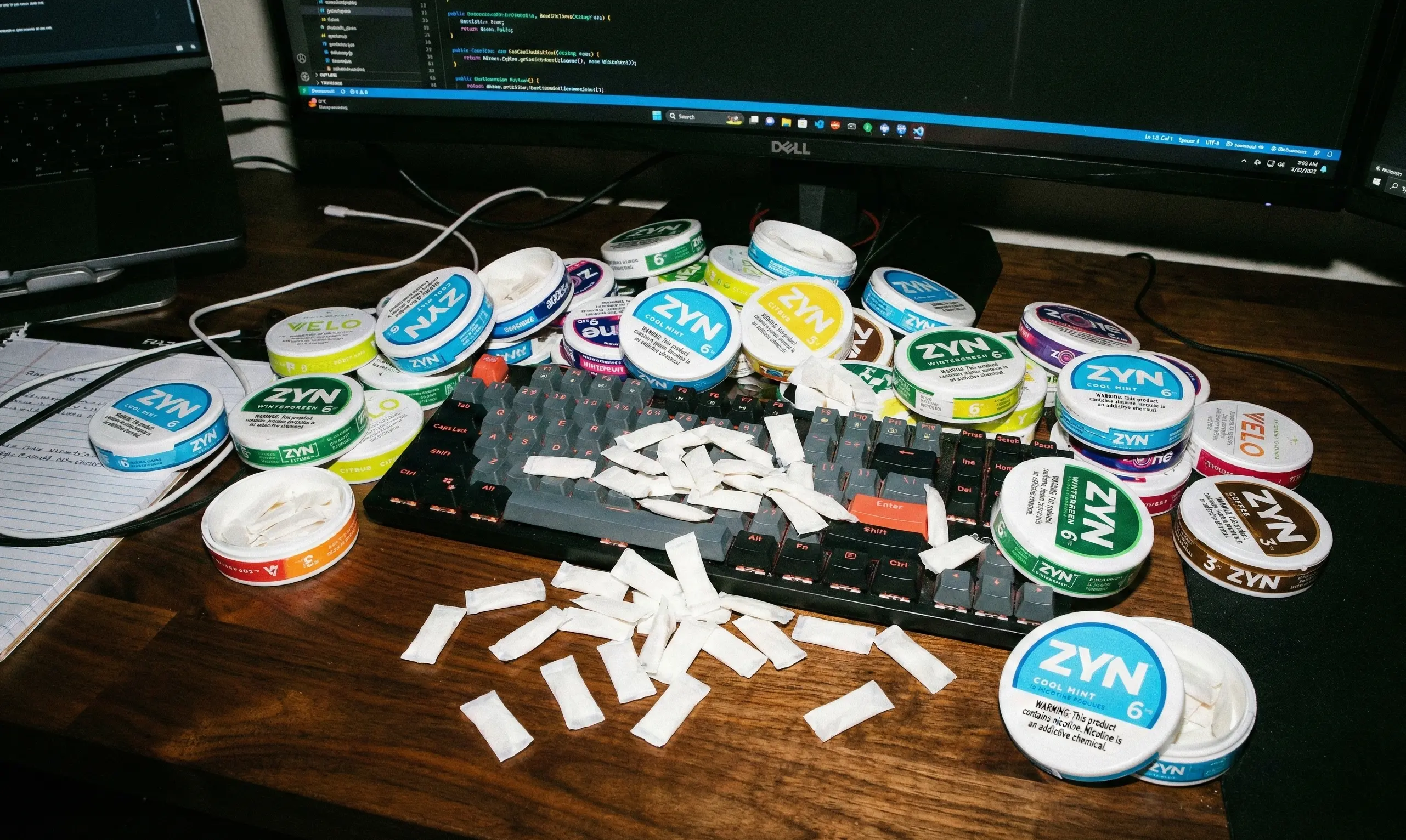
Walk into any office in San Francisco, and you''ll see the same thing on desks everywhere: little cans of Zyn. Nicotine pouches have become the unofficial productivity drug of the tech industry, and honestly, it''s not hard to understand why. Nicotine genuinely works. It sharpens focus, improves working memory, and makes that three-hour coding session feel manageable. The problem is everything else: the addiction, the cardiovascular effects, the fact that you''re now dependent on a tobacco company''s product to do your job.
We''re not speaking hypothetically here. We take Zyns too. The focus is real. The productivity boost is undeniable. But so is the creeping dependency, and the awareness that what we''re getting is a short-term dopamine hit, not any lasting cognitive benefit. You''re borrowing against your baseline, not raising it. After a year of this, your brain isn''t sharper. You''ve just developed a nicotine habit with better marketing.
The popularity of Zyn reveals something important: people are hungry for cognitive enhancement, and they''re willing to accept serious tradeoffs to get it. This is the gap we want to fill.
Thinking Harder in the Age of AI
We''re living through a strange inflection point in how humans work. AI tools like Cursor, Claude, and GPT are transforming what''s possible, but they haven''t made thinking obsolete. If anything, they''ve raised the stakes.
There''s a naive version of the AI story that goes something like: machines get smarter, humans get to relax. But that''s not what''s actually happening. Using these tools well requires sharper judgment, faster synthesis, and sustained attention. You need to hold the structure of a problem in your head while evaluating whether the AI''s output actually solves it. You need to catch subtle errors in generated code or reasoning. You need to maintain enough context to ask good follow-up questions. The bottleneck has shifted from "can I produce this output" to "can I evaluate, direct, and integrate AI-generated work effectively." The cognitive demands haven''t decreased. They''ve changed, and in some ways, intensified.
Here''s an analogy we keep returning to: when industrial automation reduced physical labor, we didn''t stop caring about our bodies. We invented the modern gym. Peloton, CrossFit, the entire fitness industry exists because we recognized that less mandatory physical work meant we needed intentional physical maintenance. Nobody thinks it''s strange to spend an hour lifting weights even though you don''t work on a farm. The same logic should apply to our brains. As AI handles more routine cognitive tasks, we need deliberate investment in the capacities that still matter: creativity, judgment, synthesis, the ability to hold complex problems in working memory long enough to actually solve them.
The Quantified Self Movement Missed the Brain
More people care about optimizing their health than at any point in history. Whoop tracks your recovery and tells you when to push harder. Function Health runs 100+ biomarkers and flags problems before they become diseases. Eight Sleep adjusts your mattress temperature to maximize deep sleep. Bryan Johnson spends millions per year trying to reverse his biological age, and whether you find that inspiring or unhinged, it reflects a broader cultural shift: people want data, they want control, and they''re willing to invest serious resources to get both.
But cognitive enhancement remains weirdly neglected. The brain, the thing that actually determines your quality of life, your productivity, your ability to be present with the people you love, gets relegated to unregulated stacks of random supplements with no feedback loop. You take some lion''s mane and hope for the best. Maybe it''s working? Hard to say. The supplement industry has gotten away with hand-waving for decades. "Supports brain health" is not a claim that means anything.
Why We Started Testing on Ourselves
We got tired of the tradeoff. We wanted the focus without the dependency. The sharpness without the cardiovascular risk. And we didn''t want to wait for someone else to figure it out.
So we started experimenting. We dug into the literature on cognitive enhancement. Not the garbage supplement marketing, but the actual research on compounds with demonstrated effects on memory, attention, and executive function. We built a list of the most promising molecules. And then we started testing them on ourselves.
This isn''t casual self-experimentation. We track everything: sleep, mood, task performance, subjective focus. We run the same experiments on friends and early collaborators. We iterate on doses, combinations, timing. We throw out things that don''t work and double down on things that do.
We''re still in this phase, about a month out from being ready to share what we''ve found. But what''s emerging is the foundation for something we think could be genuinely better than what exists today: a nootropic designed for long-term benefit, not short-term dopamine, built on compounds we''ve personally validated before asking anyone else to try them.
Building the Feedback Loop
That''s what we want to change. We''re building a daily nootropic designed around something almost no one in this space does: actual measurement.
Cognitive tasks that track your working memory, reaction time, and executive function over weeks and months. EEG monitoring that shows whether your brain activity is actually shifting in the directions associated with focus and attention. Real performance data, tied to real interventions, with enough rigor to distinguish signal from noise.
The goal isn''t to sell you a pill and hope for the best. It''s to create a system where you can see what''s working, adjust based on evidence, and build genuine confidence that you''re not just experiencing placebo. We want to answer concrete questions: does this compound improve your scores on memory tasks after two weeks? Does it change your brain activity in ways consistent with improved attention? Can we detect the effect in your reaction times?
This is hard. It requires building the measurement infrastructure alongside the intervention: the testing platform, the data pipelines, the analysis tools. But we think it''s the only honest approach. And given what''s at stake as AI reshapes cognitive work, it''s worth doing right.
Follow Along
If you''re excited about this and want to follow our journey, we''ll be posting about interesting molecules we find, their upsides and downsides, cool new papers in the nootropic space, and our data as we test and develop on ourselves.
Click here to join and be the first to know when we launch.
READY TO UNLOCK YOUR FOCUS?
Subscribe for exclusive discounts and more content like this delivered to your inbox.