OXYTOCIN VS. SEROTONIN VS. DOPAMINE: A HEAD-TO-HEAD COMPARISON
Roon Team
Oxytocin vs. Serotonin vs. Dopamine: A Head-to-Head Comparison
Your brain runs on chemistry. Understanding oxytocin vs serotonin vs dopamine is the first step toward making smarter choices about your focus, mood, and performance. Every flash of motivation, every warm feeling after a hug, every calm sense that things are going to be okay, all of it traces back to a handful of molecules. The question of oxytocin vs serotonin vs dopamine isn't really about which one is "best." It's about understanding what each one actually does so you can stop guessing and start optimizing.
These three neurochemicals get lumped together as "happy hormones," but they work in completely different ways. Confusing them is like confusing a screwdriver with a wrench. Both are useful. Neither replaces the other.
Key Takeaways:
- Dopamine drives motivation, reward, and focused attention.
- Serotonin regulates mood stability, sleep, and digestion.
- Oxytocin strengthens social bonds, trust, and emotional connection.
- Endorphins handle pain relief and the "runner's high," completing the four major feel-good chemicals.
- Comparing serotonin vs dopamine vs oxytocin vs endorphins reveals that each plays a distinct role, and you can support all four through specific lifestyle choices. The right supplementation can give dopamine-driven focus a measurable edge.
What Each Neurotransmitter Actually Does in the Oxytocin vs Serotonin vs Dopamine Debate
Before comparing them, you need a clear picture of each molecule's job description.
Dopamine: The Motivation Molecule
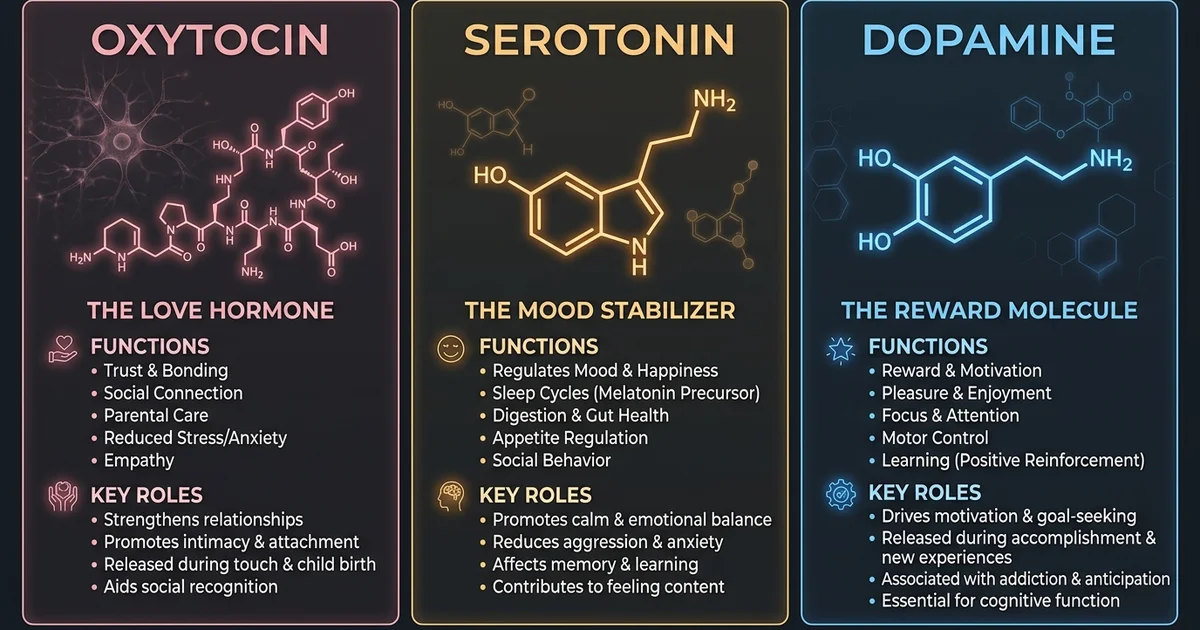
Dopamine is the brain's reward signal. It fires when you complete a task, eat something you enjoy, or make progress toward a goal. But calling it the "pleasure chemical" is a simplification. Research published in PMC shows that dopamine does double duty: it both modulates working memory circuits and mediates value-based decisions about whether a cognitive task is worth the effort.
In plain terms, dopamine doesn't just make you feel good. It decides whether you'll bother trying in the first place. Low dopamine is less about sadness and more about apathy, that flat, "why bother" feeling where your to-do list sits untouched.
A 2024 review in PMC confirmed that dopamine is a key neurotransmitter involved in motor control, motivation, reward, and cognitive function. In any discussion of oxytocin vs serotonin vs dopamine, dopamine is the molecule most directly tied to your ability to sit down, focus, and get something done.
Serotonin: The Stability Signal
Serotonin is less about excitement and more about equilibrium. It helps regulate mood, appetite, sleep, and even digestion. Here's a fact most people miss: according to research published in MDPI's Life journal, roughly 95% of the body's serotonin is found in the gastrointestinal tract, not the brain. That gut-brain connection is why your stomach feels off when you're anxious.
Where dopamine says "go get it," serotonin says "you're okay right now." It's the chemical behind contentment, not excitement. SSRIs (selective serotonin reuptake inhibitors), the most commonly prescribed antidepressants, work by keeping more serotonin available in the brain. That tells you how central this molecule is to emotional regulation.
As Medical News Today explains, a serotonin imbalance can affect the processing of emotions, while a dopamine imbalance tends to show up as apathy and hopelessness. This distinction is key to the oxytocin vs serotonin vs dopamine comparison: different deficits, different symptoms.
Oxytocin: The Bonding Agent
Oxytocin gets called the "love hormone," which is accurate but incomplete. It surges during physical touch, childbirth, and sex, but it also rises during acts of trust, generosity, and social cooperation.
Research from the Open Access Journals shows that oxytocin enhances trust and cooperation in social exchanges by promoting prosocial behaviors and reducing social threat perception. Studies using intranasal oxytocin found it increased trustworthiness judgments and altruistic behavior toward others.
Oxytocin is synthesized in the hypothalamus and works closely with dopamine. A 2024 study in PMC examined the interactions between oxytocin and dopamine, suggesting that oxytocin activity in the hypothalamus contributes to dopamine release. The two systems are not independent. They feed into each other, which is why studying oxytocin vs serotonin vs dopamine in isolation only tells part of the story.
Oxytocin vs Serotonin vs Dopamine: The Comparison Table
Here's how the three stack up side by side. And because the comparison of serotonin vs dopamine vs oxytocin vs endorphins comes up so often, endorphins get a column too.
| Feature | Dopamine | Serotonin | Oxytocin | Endorphins |
|---|---|---|---|---|
| Primary Role | Motivation & reward | Mood stability | Social bonding | Pain relief |
| Triggered By | Goal completion, novelty | Sunlight, exercise, gut health | Physical touch, trust, connection | Intense exercise, laughter |
| Deficiency Feels Like | Apathy, brain fog, procrastination | Anxiety, irritability, poor sleep | Loneliness, social withdrawal | Low pain tolerance, low mood |
| Location | Primarily brain (VTA, prefrontal cortex) | 95% in the gut, 5% in the brain | Hypothalamus | Brain and spinal cord |
| Duration of Effect | Short bursts (minutes) | Sustained background regulation | Varies with social context | 20-30 minutes post-trigger |
| Supports | Focus, learning, drive | Emotional balance, digestion, sleep | Empathy, trust, relationships | Stress relief, euphoria |
This table makes the serotonin vs dopamine vs oxytocin vs endorphins comparison easy to reference, but the real insight comes from understanding how these systems interact.
Which One Matters Most for Cognitive Performance?
If your goal is sharper focus and sustained mental output, the oxytocin vs serotonin vs dopamine breakdown reveals that dopamine is the lead actor. Serotonin and oxytocin play supporting roles, keeping your mood stable and your social stress low so dopamine can do its job. But dopamine is the one directly linked to working memory, attention, and the willingness to push through difficult cognitive tasks.
This is why most performance-oriented compounds target the dopamine system. Caffeine, for example, works partly by blocking adenosine receptors, which indirectly increases dopamine signaling in the prefrontal cortex. It's also why caffeine alone can feel jittery and unfocused. Dopamine without the calming influence of other neurochemical pathways becomes overstimulation.
The best cognitive outcomes come from stacking compounds that work together. A study indexed on PubMed found that 97 mg of L-theanine combined with 40 mg of caffeine helped participants focus attention during demanding cognitive tasks. L-theanine promotes alpha brain wave activity (associated with calm alertness) while caffeine handles the dopamine-driven motivation side. Neither worked as well alone.
The Tolerance Problem
Here's where most stimulants fall apart. Caffeine tolerance builds fast. Within a few weeks of daily use, you need more to get the same effect. Your dopamine receptors downregulate.
Theacrine, a compound structurally similar to caffeine, appears to sidestep this issue. According to Dr. Justin Lee, theacrine causes less tolerance buildup over time, making it a better option for sustained energy without needing to increase dosages.
A study published in PubMed tested a combination of caffeine, theacrine (TeaCrine), and methylliberine (Dynamine) on cognitive performance in adult male esports players. The combination improved cognitive performance and reaction time without increasing self-reported anxiety or headaches. That last part matters. Faster thinking without the side effects is the whole point.
How to Support All Four "Happy Chemicals" Naturally
Now that you understand oxytocin vs serotonin vs dopamine, you don't have to pick one. Your brain works best when all four systems are running well. Here's how the full serotonin vs dopamine vs oxytocin vs endorphins picture translates into daily habits.
For dopamine:
- Set small, completable goals throughout the day (each completion triggers a dopamine hit)
- Eat protein-rich foods (tyrosine is a dopamine precursor)
- Use targeted nootropic stacks that include caffeine, L-theanine, and theacrine
For serotonin:
- Get morning sunlight within 30 minutes of waking
- Exercise regularly (even 20 minutes of walking helps)
- Prioritize gut health through fiber and fermented foods
For oxytocin:
- Physical touch: hugs, handshakes, even petting a dog
- Acts of generosity and cooperation
- Meaningful conversation (not texting, actual face-to-face interaction)
For endorphins:
- High-intensity exercise or sustained cardio
- Laughter (genuinely funny content, not forced)
- Spicy food (capsaicin triggers a mild endorphin response)
A Smarter Way to Support Focus
Understanding oxytocin vs serotonin vs dopamine, along with endorphins, is step one. Step two is doing something about it.
Most of the "focus" products on the market dump a ton of caffeine into your system and call it a day. That gives you a dopamine spike followed by a crash, tolerance buildup, and jitters. It's a blunt instrument. Knowing the difference between oxytocin vs serotonin vs dopamine should tell you that real performance requires a more targeted approach.
Roon takes a different approach. It's a zero-nicotine sublingual pouch built around the same ingredient combination the research supports: 40 mg of caffeine, L-theanine, theacrine, and methylliberine. The caffeine provides the dopamine-driven focus. The L-theanine smooths out the rough edges. The theacrine and methylliberine extend the effect to 4-6 hours without the tolerance buildup that makes caffeine alone a losing strategy over time.
No pills to swallow. No sugar. No nicotine. Just a clean, sustained cognitive boost that works with your brain's chemistry instead of against it.
READY TO UNLOCK YOUR FOCUS?
Subscribe for exclusive discounts and more content like this delivered to your inbox.