MAGNESIUM CREAM FOR SLEEP: WHAT ACTUALLY WORKS (AND WHAT DOESN'T)
Roon Team
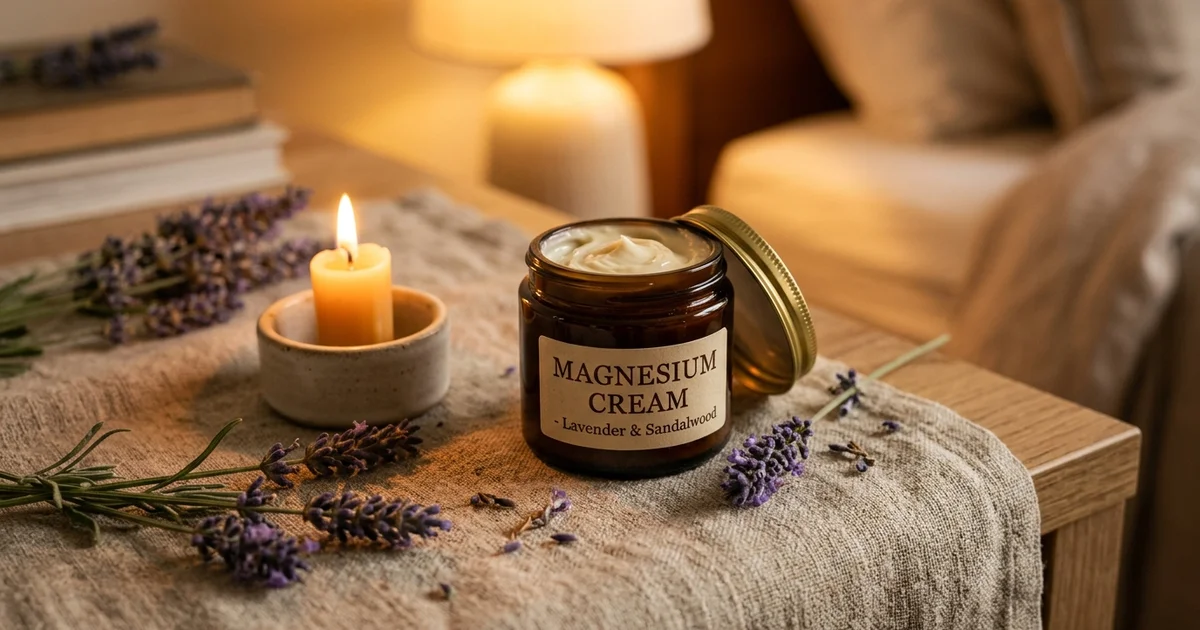
Magnesium Cream for Sleep: What Actually Works (And What Doesn't)
Your TikTok feed says magnesium cream for sleep is the answer to your 2 AM ceiling-staring habit. Rub some lotion on your feet, drift off like a baby. Simple. The topical magnesium market hit an estimated $400 million in 2024, driven largely by social media hype and influencer endorsements.
But here's the problem: the science behind rubbing magnesium on your skin tells a very different story than the one you've been sold.
Some forms of magnesium genuinely support better sleep. Others are expensive moisturizer. This article breaks down which is which, so you stop wasting money on magnesium cream for sleep products that can't deliver what they promise.
Key Takeaways
- Transdermal magnesium absorption through skin is minimal. Your skin is a barrier, not a sponge.
- Oral magnesium (specific forms) has real clinical evidence for improving sleep quality.
- The best magnesium lotion for sleep may work because of the ritual, not the magnesium itself.
- If you're deficient in magnesium, fixing that deficiency matters. But the delivery method matters just as much.
The Skin Problem: Why Magnesium Cream for Sleep Absorption Is Questionable
The entire premise of magnesium cream for sleep rests on one assumption: that magnesium ions can pass through your skin in meaningful amounts. The evidence says otherwise.
A 2017 review published in Nutrients evaluated the available research on transdermal magnesium and concluded that the claim is "scientifically unsupported." The authors noted that dead cells in the upper skin layer don't contain functional magnesium transporters. The only potential entry points, hair follicles and sweat glands, make up just 0.1% to 1% of the total skin surface.
That's a very small door for a very large promise.
A pediatric sleep specialist's analysis of the research points to a 2017 randomized, placebo-controlled trial showing that 12 weeks of transdermal magnesium did not raise serum magnesium levels compared to placebo. Twelve weeks of using magnesium cream for sleep, and no measurable difference.
NPR reported in September 2025 that dermatologist Nicholas Theodosakis theorizes any benefits from magnesium lotion likely come from the massage used to apply it, or from the moisturizing ingredients in the cream itself. The magnesium? Probably along for the ride.
So Why Do People Swear By Magnesium Cream for Sleep?
Three reasons, and none of them require magnesium to cross your skin.
The ritual effect. Rubbing magnesium cream for sleep on your feet or legs before bed is a calming, tactile routine. It signals to your brain that sleep is coming. Consistent pre-sleep rituals are one of the most well-supported tools in behavioral sleep medicine. The act of applying cream, dimming the lights, and settling into bed creates a reliable cue that primes your nervous system for rest. That's powerful on its own, no transdermal magnesium required.
The massage effect. Self-massage lowers cortisol and activates your parasympathetic nervous system. The gentle pressure on your feet or calves triggers a relaxation response that has nothing to do with whatever's in the bottle. You'd get the same benefit from unscented Eucerin.
Placebo response. Sleep is deeply tied to expectation. If you believe magnesium cream for sleep will help you drift off, your brain is more likely to cooperate. That's not a knock on placebo. It's real neuroscience. Expectation shapes neurochemistry, and the placebo effect in sleep research is consistently large. But it's not a magnesium effect.
Dr. John Winkelman, a sleep expert at Harvard, told NPR that the risks of applying magnesium to your skin are "probably extremely small." So magnesium cream for sleep won't hurt you. It just might not be doing what you think it's doing.
What the Science Says About Oral Magnesium and Sleep
If topical magnesium cream for sleep is shaky, oral magnesium is on firmer ground. But the form matters enormously.
Magnesium L-Threonate
This is the most interesting form for sleep and cognitive function. A 2024 randomized controlled trial published in Sleep Medicine X studied 80 adults aged 35 to 55 with self-reported sleep problems. Participants took 1 gram per day of magnesium L-threonate (MgT) or placebo for 21 days.
The results: MgT led to more deep sleep and more REM sleep, measured objectively via Oura Ring data. Subjective measures improved too, including behavior upon awakening, daytime energy, mood, and mental alertness. As AJMC reported, participants showed superior "readiness" and daily activity scores compared to placebo.
Why does this form work when magnesium cream for sleep doesn't? Magnesium L-threonate crosses the blood-brain barrier more effectively than other forms. It was originally developed at MIT to improve cognitive function, and its sleep benefits appear to be a downstream effect of better brain bioavailability. Most magnesium supplements raise serum levels in your blood but don't meaningfully change magnesium concentrations in cerebrospinal fluid. MgT does, and that distinction matters when the target is your central nervous system.
The researchers noted that magnesium may play a regulatory role for neurotransmitters like GABA, which promotes relaxation and is directly involved in sleep initiation. Higher brain magnesium availability means better GABA receptor function, which means an easier transition from wakefulness to sleep.
Magnesium Bisglycinate
A 2025 randomized, placebo-controlled trial enrolled 155 adults with self-reported poor sleep. The magnesium bisglycinate group (250 mg elemental magnesium daily) showed a greater reduction in Insomnia Severity Index scores compared to placebo by week four.
The catch: the effect size was small (Cohen's d = 0.2). The researchers described the benefit as "modest." People with lower baseline dietary magnesium intake saw bigger improvements, which makes sense. If you're already getting enough magnesium from food, supplementing won't move the needle much.
Magnesium Glycinate vs. Oxide vs. Citrate: A Quick Comparison
Not all magnesium supplements are created equal. Here's how the common forms stack up for sleep, and why magnesium cream for sleep falls short compared to oral options:
| Form | Bioavailability | Sleep Evidence | Best For |
|---|---|---|---|
| Magnesium L-Threonate | High (crosses blood-brain barrier) | Strong (RCT showing improved deep/REM sleep) | Sleep quality, cognitive function |
| Magnesium Bisglycinate | High | Moderate (modest ISI improvement) | General sleep support, relaxation |
| Magnesium Citrate | Moderate | Limited | General supplementation, digestion |
| Magnesium Oxide | Low (~4% absorption) | Weak | Laxative effect, not ideal for sleep |
| Topical Magnesium Cream | Minimal/unproven | None (no controlled trials support sleep claims) | Skin moisturizing |
The Real Magnesium Cream for Sleep Question: Does the Delivery Method Matter?
Yes. It matters a lot.
Your gastrointestinal tract is designed to absorb minerals. It has active transport mechanisms, carrier proteins, and an entire biological infrastructure built for the job. Your skin is designed to keep things out. That's its primary function. Comparing the two is like comparing a highway to a brick wall with a few cracks in it.
This doesn't mean magnesium cream for sleep is useless for everything. There's some early evidence topical magnesium may help with localized muscle soreness, and a small pilot study did show some transdermal absorption of magnesium through hair follicles and sweat glands. But the amounts were small, and the pathway is inconsistent. For systemic effects like improved sleep architecture, you need magnesium to reach your brain. The most reliable way to get it there is through your gut.
If you're searching for the best magnesium lotion for sleep, the honest answer is that the lotion part probably isn't contributing much to the sleep part. The bedtime routine it creates? That has value. The magnesium delivery? Stick with oral forms that have actual clinical data behind them. Anyone claiming they've found the best magnesium lotion for sleep is likely benefiting from the ritual, not the cream.
How to Actually Use Magnesium for Better Sleep (Instead of Relying on Magnesium Cream for Sleep)
If you want magnesium to support your sleep, here's a practical protocol based on the available evidence:
-
Choose the right form. Magnesium L-threonate or bisglycinate have the strongest evidence for sleep. Avoid oxide (poor absorption) and be skeptical of magnesium cream for sleep products making bold claims.
-
Get the dose right. The MgT study used 1 gram of magnesium L-threonate daily (about 75 mg elemental magnesium). The bisglycinate study used 250 mg elemental magnesium. Start at the lower end and adjust.
-
Time it correctly. Take it 1 to 2 hours before bed. Both major studies had participants dose in the evening.
-
Fix your diet first. Dark leafy greens, nuts, seeds, and whole grains are all high in magnesium. Supplementation works best when it's filling a genuine gap, not compensating for a terrible diet.
-
Keep the ritual. If you like applying magnesium cream for sleep before bed, keep doing it. Just don't rely on it as your primary magnesium source. Pair it with an oral supplement that can actually reach your bloodstream and your brain.
Sleep Quality Is Cognitive Performance
Good sleep isn't just about feeling rested. It's about how well your brain works the next day.
The magnesium L-threonate study found that better sleep translated directly into improved daytime alertness, mood, and productivity. That connection between sleep quality and cognitive output is one of the most reliable findings in neuroscience. Even a single night of poor sleep degrades attention, working memory, and decision-making. Chronic poor sleep compounds the damage.
This is why sleep hygiene isn't separate from performance optimization. It's the foundation of it. You can have the best morning routine, the cleanest diet, and the most disciplined schedule, but if you're running on five hours of fragmented sleep, none of it will save you.
Getting your nighttime routine right, whether that includes oral magnesium supplementation instead of magnesium cream for sleep, consistent sleep timing, or a dark, cool room, sets the stage for sharper cognition during your waking hours. And once you've optimized the recovery side of the equation, Roon can help you make the most of those waking hours. Its combination of caffeine, L-theanine, theacrine, and methylliberine delivers sustained focus for 4 to 6 hours without the jitters or crash that derail your afternoon. Sleep well at night. Perform well during the day. That's the whole system.
READY TO UNLOCK YOUR FOCUS?
Subscribe for exclusive discounts and more content like this delivered to your inbox.