HOW TO INCREASE FOCUS AND ATTENTION SPAN (WITHOUT BURNING OUT)
Roon Team
How to Increase Focus and Attention Span (Without Burning Out)
You sat down to work 20 minutes ago. Since then, you've checked your phone twice, opened three tabs that have nothing to do with your project, and reread the same paragraph four times. Sound familiar?
If you're wondering how to increase focus and attention span, you're asking the right question at the right time. Research from Dr. Gloria Mark at UC Irvine found that the average person can only sustain attention on a single screen for about 47 seconds before switching to something else. Two decades ago, that number was closer to two and a half minutes. Your attention is shrinking, and it's not because you're lazy. It's because your environment is designed to fragment it.
The good news: attention is trainable. Learning how to increase focus and attention span is grounded in neuroscience, not productivity theater. The strategies below will show you exactly how.
Key Takeaways
- Your attention span is a skill, not a fixed trait. You can strengthen it with deliberate practice.
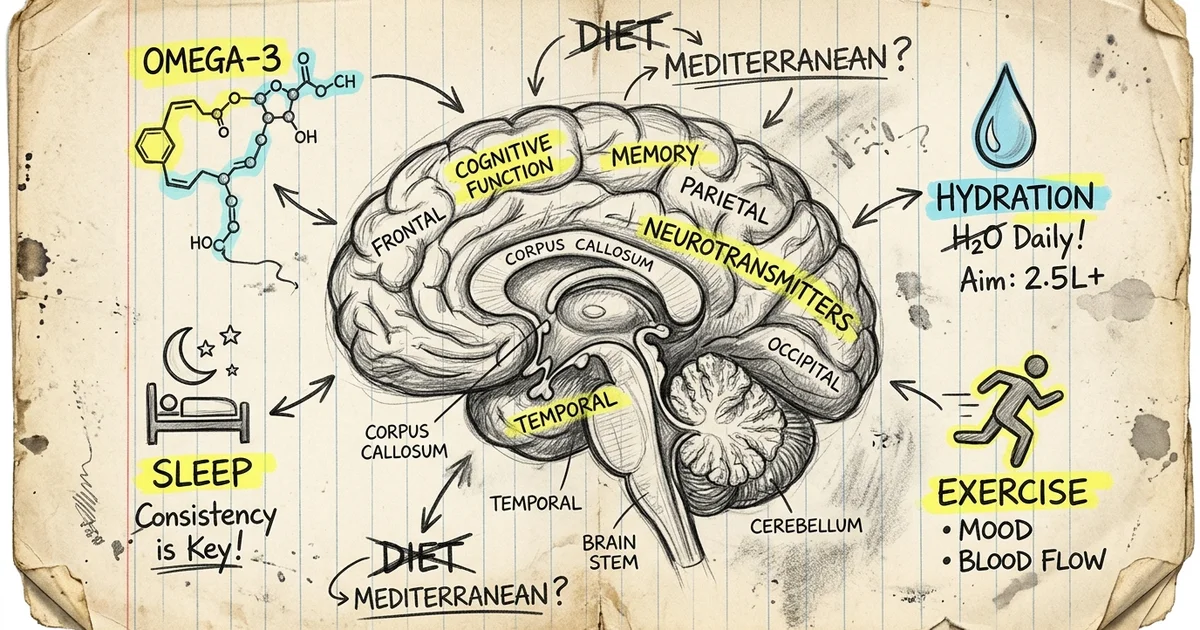
- Sleep, exercise, and nutrition form the biological foundation of sustained focus.
- Attention span training works best when you combine environmental design with neurochemical support.
- Caffeine alone isn't enough. Pairing it with compounds like L-Theanine produces better, longer-lasting focus without the crash.
Why Your Attention Span Feels Broken
Before you can learn how to increase focus and attention span, you need to understand what's actually happening in your brain.
Attention isn't one thing. Neuroscientists break it into at least three types: alerting (general readiness), orienting (directing focus to a specific stimulus), and executive attention (holding focus while filtering distractions). The last one, executive attention, is the one most people are struggling with.
Every notification, every open browser tab, every background conversation competes for your executive attention. Your prefrontal cortex, the brain region responsible for sustained focus, has a limited energy budget. Each interruption forces it to spend resources reorienting. According to Dr. Mark's research, recovering from a single interruption can take almost half an hour.
That's not a willpower problem. That's a resource problem. And solving it requires a real plan for how to increase focus and attention span at the biological level.
How to Increase Focus and Attention Span: 8 Strategies That Actually Work
1. Fix Your Sleep First
This isn't glamorous advice, but it's the most important item on this list. Sleep deprivation hits your prefrontal cortex harder than almost any other brain region. Even one night of poor sleep reduces working memory, slows reaction time, and makes it nearly impossible to filter out irrelevant information.
If you're getting fewer than seven hours per night and wondering how to increase focus and attention span, start here. No supplement, app, or technique will compensate for chronic sleep debt.
The minimum effective dose: Seven to nine hours per night, with consistent wake times. Your circadian rhythm rewards predictability.
2. Use Time-Blocked Focus Sessions
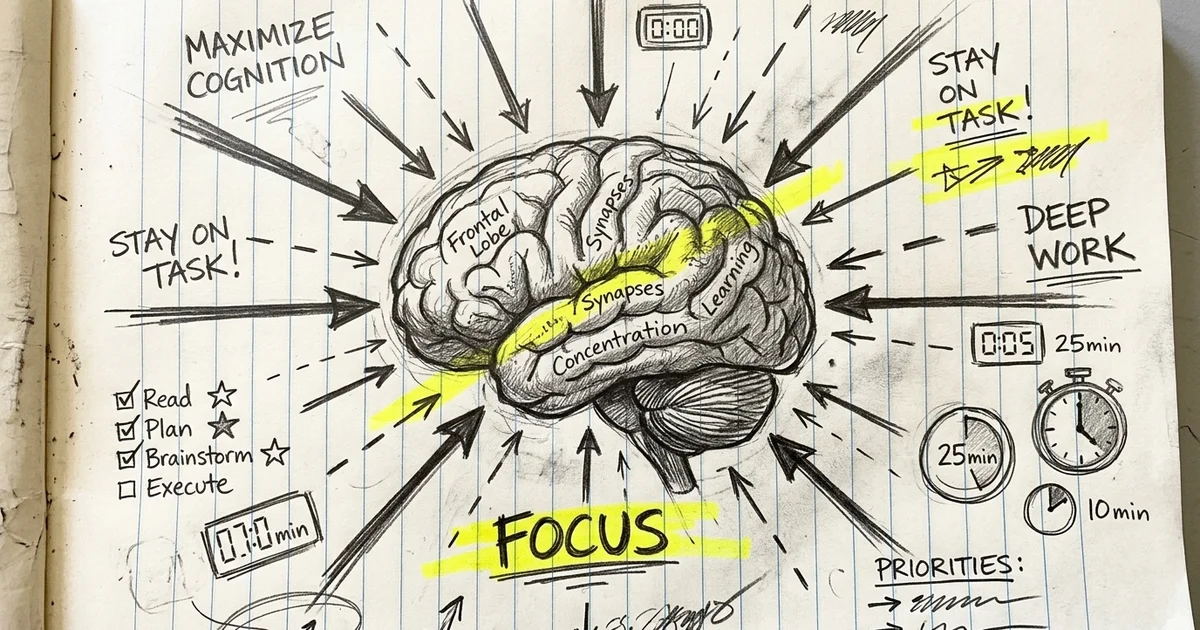
The Pomodoro Technique (25 minutes of focused work followed by a 5-minute break) gets recommended constantly because it works on a basic neurological principle: your brain sustains attention better in defined intervals than in open-ended stretches. This is one of the simplest ways to increase attention span without overhauling your entire routine.
But 25 minutes is just a starting point. If that feels too short, extend to 50 minutes with a 10-minute break. The key is the boundary, not the specific number. Giving your brain a clear endpoint reduces the psychological resistance to starting.
How to do it:
- Choose one task. Just one.
- Set a timer for 25 to 50 minutes.
- Work on nothing else until the timer goes off.
- Take a genuine break (not scrolling your phone).
- Repeat.
3. Train Your Attention Like a Muscle
Attention span training isn't a metaphor. Focused-attention meditation, where you concentrate on a single point (usually your breath) and redirect your mind every time it wanders, physically changes the brain.
Research published in Psychiatry Research: Neuroimaging found that participants who completed an eight-week mindfulness program showed measurable increases in gray matter density in brain regions associated with learning, memory, and emotional regulation. The attention-relevant takeaway: the prefrontal cortex gets stronger with use, just like a muscle. This kind of attention span training is one of the most evidence-backed ways to increase attention span over time.
You don't need to meditate for an hour. Ten minutes per day is enough to start seeing changes in your ability to sustain focus within two to three weeks. If you're serious about how to increase focus and attention span, daily meditation is non-negotiable.
4. Move Your Body (Even Briefly)
Exercise is one of the most reliable ways to increase attention span, and the effect is both immediate and cumulative.
A single bout of moderate exercise (20 to 30 minutes of walking, cycling, or resistance training) increases blood flow to the prefrontal cortex and triggers the release of brain-derived neurotrophic factor (BDNF), a protein that supports the growth of new neural connections. In practical terms, you think more clearly after you move.
Long-term, regular exercise raises your baseline levels of dopamine and norepinephrine, two neurotransmitters directly tied to sustained attention. If you're exploring how to increase focus and attention span without any special equipment or subscriptions, a daily 30-minute walk is one of the best investments you can make.
5. Design Your Environment for Focus
Your brain is constantly scanning the environment for potential threats and rewards. An open browser with social media tabs, a phone face-up on your desk, a noisy open-plan office: these all register as potential rewards or interruptions, pulling your attention away even when you're not consciously engaging with them. Knowing how to help attention span means controlling these external triggers before they control you.
Practical fixes:
- Phone: Put it in another room or in a drawer. Turning it face-down isn't enough. The mere presence of your phone reduces available cognitive capacity, even when it's off.
- Browser: Use a site blocker during focus sessions. Tools like Cold Turkey or Freedom remove the option entirely.
- Noise: If you can't control your environment, use noise-canceling headphones with brown noise or instrumental music. Lyrics compete with your verbal working memory.
6. Manage Your Blood Sugar
This one gets overlooked, but it matters for anyone learning how to increase focus and attention span. Your brain consumes roughly 20% of your total caloric intake despite being only about 2% of your body weight. When blood sugar drops, the prefrontal cortex is one of the first regions to feel it.
The result? Brain fog, difficulty concentrating, and an almost magnetic pull toward easy dopamine hits (checking your phone, snacking, scrolling).
What to eat for focus:
| Food Type | Examples | Why It Helps |
|---|---|---|
| Complex carbs | Oats, sweet potatoes, brown rice | Slow, steady glucose release |
| Protein | Eggs, fish, Greek yogurt | Supports neurotransmitter production |
| Healthy fats | Avocado, nuts, olive oil | Supports myelin sheath integrity |
| Hydration | Water, herbal tea | Even mild dehydration impairs cognition |
Skip the sugary energy drinks. The spike-and-crash cycle they create is the opposite of sustained attention.
7. Reduce Decision Fatigue Before It Starts
Every decision you make, from what to wear to what to eat to which email to answer first, draws from the same pool of executive function that powers your attention. By midafternoon, that pool is depleted. Understanding how to help attention span means protecting that pool early in the day.
Ways to help attention span by reducing decision load:
- Batch similar tasks together (all emails at once, all calls at once).
- Prepare your next day's priorities the night before.
- Automate or eliminate low-value decisions (meal prep, capsule wardrobe, standing orders for household supplies).
The fewer decisions you burn through in the morning, the more focus you'll have left for deep work.
8. Support Your Neurochemistry
Your ability to focus depends on a handful of neurotransmitter systems working in concert. Understanding this chemistry is essential to how to increase focus and attention span at a deeper level. The three most relevant systems:
- Adenosine: Builds up throughout the day and creates the feeling of mental fatigue. Caffeine works by blocking adenosine receptors, which is why your first cup of coffee feels like a light switch.
- Dopamine: Drives motivation and reward-seeking. Low dopamine makes it hard to start tasks and easy to get distracted.
- GABA: The brain's primary inhibitory neurotransmitter. It helps quiet neural noise so you can focus on one thing instead of everything.
Caffeine alone addresses adenosine but does nothing for GABA or dopamine, which is why coffee often produces jittery alertness without real focus. A study published on PubMed found that combining 97 mg of L-Theanine with 40 mg of caffeine helped participants focus attention during demanding cognitive tasks better than caffeine alone. L-Theanine promotes alpha brain wave activity and modulates GABA, which smooths out the rough edges of stimulant-driven alertness.
Theacrine, a compound structurally related to caffeine, offers a similar adenosine-blocking effect but with a longer duration and, according to available research, less tolerance buildup over time. That means the effect stays consistent day after day, unlike caffeine, which requires escalating doses to achieve the same result. Stacking these compounds is one of the more advanced ways to increase attention span once your behavioral habits are solid.
How to Increase Focus and Attention Span: The Long Game
Quick fixes feel good. But if you actually want to rebuild your attention span, you need to think in terms of weeks and months, not hours. Attention span training is a long-term commitment, not a weekend project.
Here's what a realistic attention-building protocol looks like:
Weeks 1 to 2: Fix sleep hygiene. Remove phone from bedroom. Start 10-minute daily attention span training sessions through focused meditation.
Weeks 3 to 4: Add 25-minute Pomodoro sessions during your highest-energy hours. Introduce a daily walk or exercise habit.
Weeks 5 and beyond: Gradually extend focus sessions. Refine your environment. Begin stacking neurochemical support on top of your behavioral foundation.
The order matters. Behavioral changes first, supplementation second. You can't out-supplement a broken routine. Anyone serious about how to increase focus and attention span needs to respect this sequence.
Cut Through the Fog
If you've built the habits, fixed the sleep, designed the environment, and you're still hitting a wall by 2 PM, the bottleneck might be neurochemical. You now know how to increase focus and attention span through behavior and environment. The final piece is targeted neurochemical support.
That's the problem Roon was designed to solve. It's a zero-nicotine sublingual pouch that delivers a precise stack of Caffeine (40mg), L-Theanine, Theacrine, and Methylliberine, targeting the three neurotransmitter systems behind brain fog: adenosine, GABA, and dopamine. No jitters. No crash. Four to six hours of clean, sustained focus.
It's not a replacement for the fundamentals on this list. It's what you add once the fundamentals are already in place.
READY TO UNLOCK YOUR FOCUS?
Subscribe for exclusive discounts and more content like this delivered to your inbox.