REMEDIES FOR BRAIN FOG: WHAT ACTUALLY WORKS (AND WHAT'S A WASTE OF TIME)
Roon Team
Remedies for Brain Fog: What Actually Works (and What's a Waste of Time)
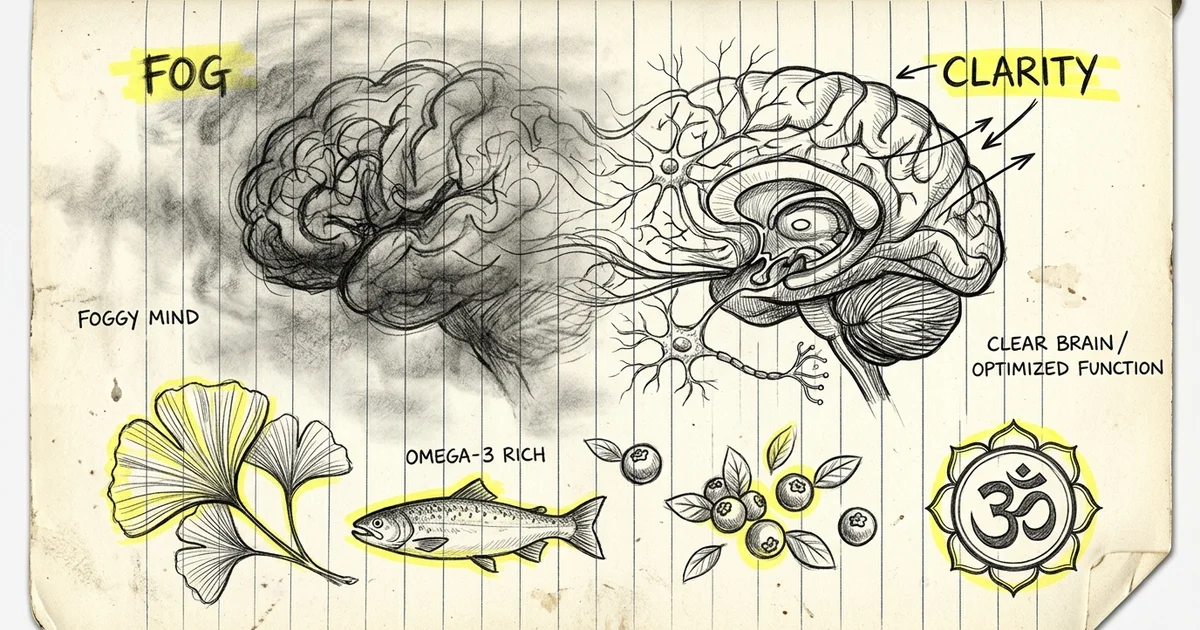
You're staring at a screen. You've read the same sentence four times. The words are there, but your brain won't grab them. It's not fatigue, exactly. It's more like someone draped a wet towel over your prefrontal cortex.
This is brain fog, and if you're searching for remedies for brain fog, you're probably in the middle of it right now. So let's skip the fluff and talk about what the science actually supports.
Key Takeaways:
- Brain fog is a real, measurable decline in cognitive function, not a personality flaw or laziness.
- The most effective remedies for brain fog target root causes: sleep debt, chronic inflammation, dehydration, and neurotransmitter imbalance.
- Most "brain fog supplements" sold online are underdosed or lack clinical evidence.
- Stacking specific compounds that work on different neurochemical pathways produces the strongest results among remedies for brain fog.
What Brain Fog Actually Is (and Isn't)
Brain fog isn't a medical diagnosis. It's a cluster of symptoms. According to Cleveland Clinic, brain fog describes difficulty concentrating, forgetfulness, slow reaction time, losing your train of thought, and mental exhaustion. It can stem from poor sleep, autoimmune conditions, medication side effects, or lingering viral infections.
The term gets thrown around loosely, but the cognitive deficits behind it are measurable. Researchers use tasks like Go/NoGo protocols, the Stroop test, and working memory assessments to quantify what "foggy" actually means in neurological terms. When your brain is fogged, your attention networks are underperforming. Your default mode network, the part of your brain responsible for mind-wandering, is overactive. You're distracted by your own thoughts.
A 2025 review published in PMC framed brain fog as a public health concern, noting its links to long COVID, chronic fatigue syndrome, and other conditions that affect millions of people. This isn't a niche problem. It's widespread, and finding effective remedies for brain fog has become a priority for researchers and patients alike.
So what actually fixes it?
Remedies for Brain Fog That Have Real Evidence
1. Fix Your Sleep First
This is the least exciting of all remedies for brain fog, and the most important one.
A 2025 study published in Cureus directly linked sleep deprivation to brain fog, cognitive decline, and cardiovascular risk. The researchers found that even partial sleep restriction (sleeping 5 to 6 hours instead of 7 to 8) impaired attention, working memory, and executive function.
A meta-analysis in Frontiers in Neuroscience confirmed this pattern across healthy adults: cognitive performance drops reliably when sleep falls below seven hours.
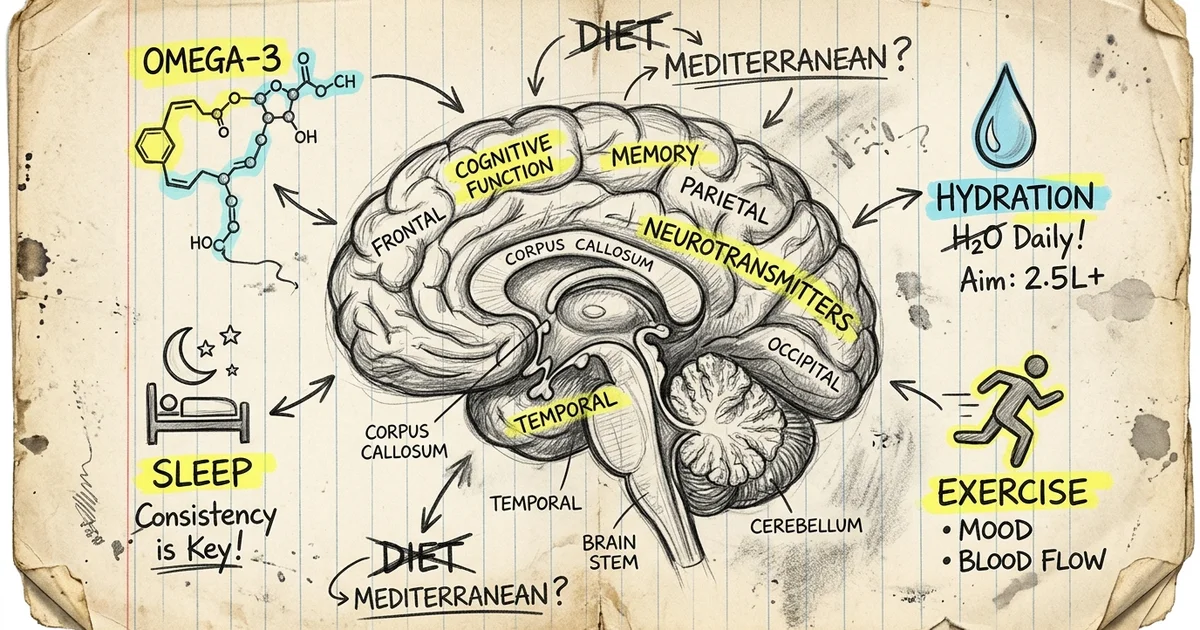
You don't need a sleep coach or a $3,000 mattress. You need consistency. Going to bed and waking up at roughly the same time, even on weekends, stabilizes your circadian rhythm and improves the quality of deep sleep stages where memory consolidation happens.
If you're sleeping six hours a night and wondering why you can't focus, the best remedy for brain fog isn't a supplement. It's your pillow.
2. Move Your Body (Even a Little)
Exercise is one of the most well-documented remedies for brain fog we have. And you don't need to run a marathon.
Research covered by NPR in December 2024 highlighted that even short bouts of physical activity can improve cognitive performance, with effects lasting up to 24 hours after a single session. A March 2025 study reported by ScienceDaily found that exercise of any kind boosts brainpower at any age.
The mechanism is straightforward. Exercise increases cerebral blood flow, promotes the release of brain-derived neurotrophic factor (BDNF), and reduces systemic inflammation. All of these directly counteract the biological underpinnings of brain fog.
A 20-minute walk counts. A bike ride counts. Resistance training counts. The bar is lower than you think, and as remedies for brain fog go, movement is among the most accessible.
3. Hydrate Before You Caffeinate
Dehydration is the silent brain fog trigger that almost everyone overlooks. Research has consistently shown that even mild dehydration, around 1 to 2 percent of body weight, impairs attention, working memory, and mood. Most people wake up mildly dehydrated and reach for coffee before water, which only compounds the problem since caffeine is a mild diuretic.
Start your morning with 16 to 20 ounces of water before you touch anything caffeinated. Among free remedies for brain fog, this one takes 30 seconds, and the cognitive difference is noticeable within an hour.
4. Address Gut Health
The gut-brain axis is not a wellness buzzword. It's a bidirectional communication system between your enteric nervous system and your central nervous system, and gut health is one of the most overlooked remedies for brain fog.
Stanford researchers in 2025 explored the role of the gut-brain axis in conditions including long COVID and anxiety, highlighting how gut microbiome disruptions can directly influence neurological function. A review in PMC detailed how gut microbiota affects brain development and mental health through immune signaling and neurotransmitter production.
Your gut produces roughly 90% of the body's serotonin and a substantial portion of its dopamine precursors. If your microbiome is disrupted by antibiotics, a poor diet, or chronic stress, your neurotransmitter balance shifts. The result? Foggy thinking, low motivation, and poor concentration.
Practical fixes: eat more fiber-rich whole foods, fermented foods like yogurt or kimchi, and reduce ultra-processed food intake.
5. Target the Right Neurotransmitter Pathways
Here's where most people searching for remedies for brain fog go wrong. They grab a single-ingredient supplement, usually just caffeine, and call it a day. Caffeine works, but it works on only one pathway (adenosine receptor antagonism), and it comes with well-known downsides: jitters, tolerance buildup, and an energy crash when it wears off.
The science points toward multi-pathway approaches as more effective remedies for brain fog.
Caffeine + L-Theanine: The Foundation
A systematic review in PMC analyzed multiple studies on the caffeine and L-theanine combination. The findings were consistent: the pairing improved attention, task-switching, and overall cognitive performance beyond what either compound achieved alone. A study published in Scientific Reports found that the L-theanine and caffeine combination improved total cognition composite scores and reduced activity in the default mode network, the brain region linked to mind-wandering and distractibility.
L-theanine modulates GABA and promotes alpha brain wave activity, which is the neural signature of calm, focused attention. Caffeine blocks adenosine, the neurotransmitter that makes you sleepy. Together, they produce clean focus without the anxious edge, making this pairing one of the best-studied remedies for brain fog.
Theacrine: Sustained Energy Without Tolerance
Theacrine (sold commercially as TeaCrine) acts on the same adenosine receptors as caffeine but with a longer half-life and, critically, no evidence of tolerance buildup with repeated use. A dose-response study published in Scientific Reports examined theacrine's effects on cognitive performance and subsequent sleep, confirming its stimulatory benefits without the sleep disruption that caffeine often causes.
Methylliberine: The Fast-Acting Complement
Methylliberine (Dynamine) works as a rapid-onset neuroactivator. A study published in Nutrients found that methylliberine ingestion improved multiple indices of mood and affect. When combined with caffeine and theacrine, the three compounds create a staggered release effect: methylliberine kicks in fast, caffeine sustains the middle, and theacrine carries the tail end.
A study published in Cureus specifically tested this three-compound stack and found it enhanced cognitive performance in esports athletes, a population that demands sustained focus under pressure. For anyone exploring remedies for brain fog, this kind of multi-compound approach reflects where the research is heading.
What Doesn't Work (or Isn't Worth the Money)
| Remedy | The Claim | The Reality |
|---|---|---|
| Mega-dose B vitamins | "Boosts energy and clears fog" | Only helps if you're deficient. Most people eating a normal diet aren't. |
| Essential oils | "Peppermint clears mental fog" | No controlled studies support cognitive enhancement from aromatherapy. |
| Generic "brain supplements" | "Proprietary blend for focus" | Most hide behind proprietary blends to mask underdosed ingredients. |
| Nootropic mushrooms alone | "Lion's mane fixes everything" | Promising early research, but effect sizes are small and study quality is mixed. |
| More caffeine | "Just drink another coffee" | Past 400mg/day, you get diminishing returns and increased anxiety. |
The pattern is clear: single-ingredient solutions rarely qualify as effective remedies for brain fog because brain fog rarely has a single cause.
The Lifestyle Stack: Putting Remedies for Brain Fog All Together
If you want a practical protocol, here's what the evidence supports, ranked by impact:
- Sleep 7+ hours consistently. Non-negotiable. Every other remedy for brain fog is a band-aid without this.
- Move for 20+ minutes daily. Walk, lift, bike. Pick what you'll actually do.
- Hydrate first thing in the morning. Water before caffeine. Every day.
- Eat real food. Prioritize fiber, protein, and fermented foods. Cut back on processed sugar.
- Use a multi-compound nootropic stack that targets adenosine, GABA, and dopamine pathways simultaneously.
Steps one through four are free. Step five is where targeted supplementation earns its place among proven remedies for brain fog.
Cut Through the Fog
Brain fog isn't something you have to accept. The neurochemistry behind it is well understood, and the pathways that drive it (adenosine buildup, GABA imbalance, dopamine dysregulation) respond to specific interventions. The best remedies for brain fog combine lifestyle changes with targeted compounds that address these systems directly.
Roon was built around this exact science. It combines caffeine (40mg), L-theanine, theacrine, and methylliberine in a zero-nicotine sublingual pouch that delivers 4 to 6 hours of sustained focus without jitters, crashes, or tolerance buildup. No pills to swallow. No coffee to brew. Just a clean, fast-acting stack that targets the three neurochemical systems most responsible for mental clarity.
If you've fixed your sleep, you're moving your body, and you're still fighting through the haze, your brain might just need better fuel. Among all the remedies for brain fog out there, giving your neurochemistry the right inputs is the one that sticks.
READY TO UNLOCK YOUR FOCUS?
Subscribe for exclusive discounts and more content like this delivered to your inbox.