BRAIN FOG NATURAL REMEDIES: WHAT ACTUALLY WORKS (AND WHAT DOESN'T)
Roon Team
Brain Fog Natural Remedies: What Actually Works (and What Doesn't)
You know the feeling. You're staring at your screen, re-reading the same sentence for the fourth time, and the words just won't stick. Your thoughts feel like they're moving through wet concrete. You had coffee an hour ago. It didn't help. If you've been searching for brain fog natural remedies, you're not alone.
Brain fog natural remedies are one of the most searched health topics online right now, and for good reason. A 2024 study published in Frontiers in Human Neuroscience that characterized brain fog across 25,796 participants confirmed what most of us already suspected: this isn't just a vague complaint. It's a measurable pattern of cognitive impairment involving attention, memory, processing speed, and executive function.
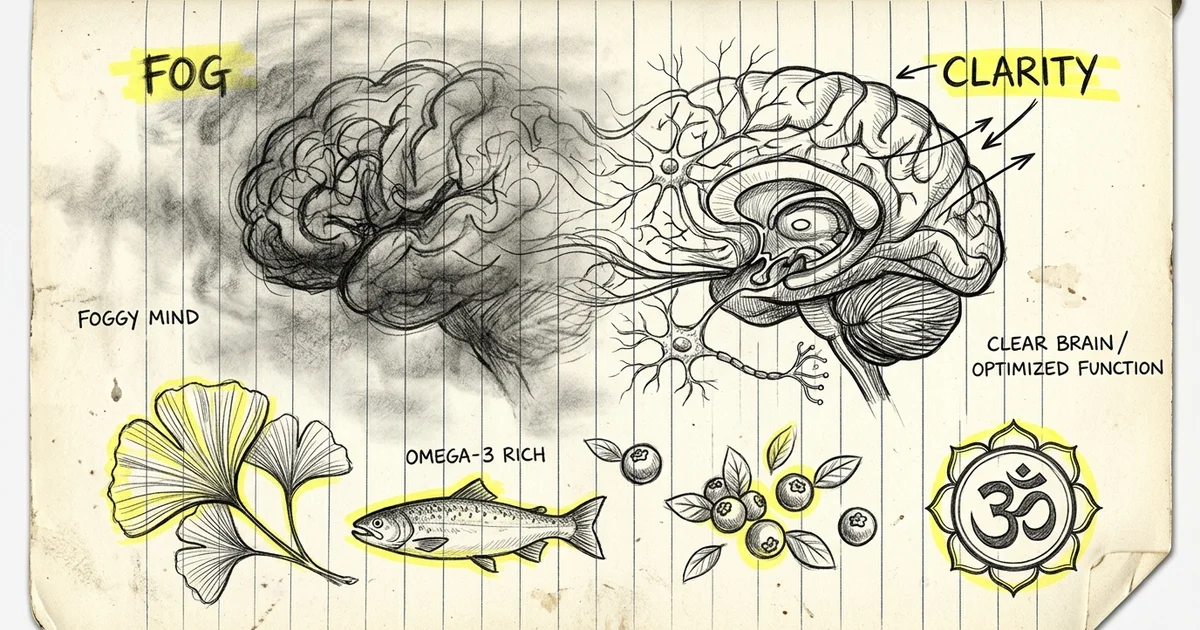
The problem is that most advice on brain fog natural remedies ranges from obvious ("drink more water") to unproven ("take this $80 mushroom blend"). So here's a more honest look at the natural remedies for brain fog and fatigue that actually have science behind them, the ones that don't, and why the answer usually isn't a single fix.
Key Takeaways
- Brain fog is a real neurological pattern, not laziness or "just stress." It involves measurable deficits in attention, memory, and processing speed.
- Sleep, exercise, and nutrition are the foundation. No supplement fixes a broken baseline.
- Specific compounds like L-theanine, caffeine, and theacrine have clinical evidence supporting their effects on the exact cognitive functions brain fog disrupts.
- Most natural brain fog remedies sold online skip the dose and combination data that actually matters.
What Brain Fog Actually Is (and Why Brain Fog Natural Remedies Matter)
Brain fog is not a clinical diagnosis. You won't find it in the DSM-5 or ICD-11. But that doesn't mean it's imaginary, and understanding the condition is the first step toward finding brain fog natural remedies that work.
Neurologically, brain fog describes a cluster of symptoms: poor concentration, slow recall, difficulty finding words, and a general sense that your mental sharpness has been dialed down. Research published in Nature Neuroscience in 2024 found that long COVID patients experiencing brain fog showed disruption to blood vessel integrity in the brain, confirming a biological basis for the condition.
Brain fog shows up in over 20 different medical conditions, from autoimmune disorders to hormonal shifts to chronic sleep deprivation. But millions of otherwise healthy people experience it too, usually driven by a combination of poor sleep, chronic stress, nutritional gaps, and stimulant dependence. That's why so many people turn to brain fog natural remedies for relief.
The distinction matters. If your brain fog is tied to an underlying medical condition, you need a doctor. If it's tied to lifestyle factors, the right brain fog natural remedies are more straightforward, though not always easy.
The Foundational Brain Fog Natural Remedies
Before reaching for any supplement, three things need to be in order. Think of these as the operating system your brain runs on. No app works if the OS is broken. These foundational natural remedies for brain fog and fatigue form the base of any effective protocol.
Sleep: The Non-Negotiable
A 2025 study published in Cureus evaluated the direct impact of sleep deprivation on brain fog in young adults. The findings were clear: poor sleep quality was directly linked to difficulties with memory, attention, and mental clarity.
This isn't surprising. During deep sleep, your brain clears metabolic waste through the glymphatic system, consolidates memories, and restores neurotransmitter sensitivity. Cut that process short, and you wake up cognitively impaired. According to the Sleep Foundation, sleep deprivation impairs memory consolidation and puts people at risk of forming false memories. Of all brain fog natural remedies, sleep optimization may be the single most effective intervention.
The target is 7 to 9 hours. Not 7 to 9 hours in bed scrolling your phone. Actual sleep.
Exercise: The Most Underrated Cognitive Tool
Harvard Health reports that regular aerobic exercise boosts the size of the hippocampus, the brain region responsible for verbal memory and learning. A review in PMC confirmed that aerobic fitness spares age-related brain tissue loss and enhances the function of higher-order brain regions involved in cognitive control.
You don't need to train for a marathon. Thirty minutes of moderate-intensity movement, enough to elevate your heart rate, five days a week is the threshold most studies point to. Walking counts. Swimming counts. The key is consistency, making exercise one of the most accessible brain fog natural remedies available.
Exercise also improves brain fog indirectly. It reduces cortisol, improves sleep quality, and increases blood flow to the prefrontal cortex, the region most affected when you feel mentally "slow."
Nutrition: Fuel, Not Magic
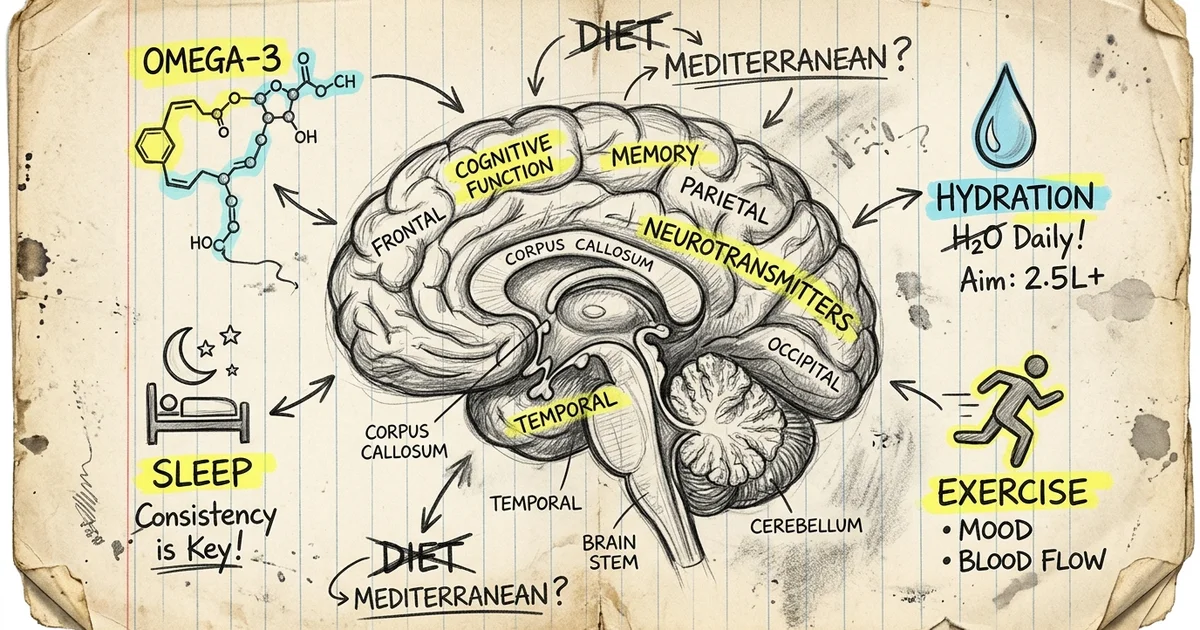
Your brain consumes roughly 20% of your daily caloric intake despite being about 2% of your body weight. It runs on glucose, amino acids, essential fatty acids, and a steady supply of B vitamins, magnesium, and vitamin D. Correcting nutritional gaps is one of the most overlooked brain fog natural remedies.
Diets rich in omega-3 fatty acids (fatty fish, walnuts, flaxseed), leafy greens, and whole grains consistently outperform processed-food-heavy diets in cognitive testing. The Mediterranean and MIND diets have the strongest evidence base here.
Common nutritional gaps that contribute to brain fog:
| Nutrient | Role in Cognition | Common Sources |
|---|---|---|
| Omega-3 (DHA/EPA) | Neuronal membrane integrity, anti-inflammatory | Salmon, sardines, walnuts |
| Vitamin D | Neuroprotection, mood regulation | Sunlight, eggs, fortified foods |
| Magnesium | Neurotransmitter function, sleep quality | Dark chocolate, spinach, almonds |
| B12 | Myelin sheath maintenance, energy metabolism | Meat, fish, dairy |
| Iron | Oxygen transport to brain tissue | Red meat, lentils, spinach |
If you're deficient in any of these, no amount of nootropics will compensate. Get bloodwork done. It's the most underused diagnostic tool for brain fog.
Targeted Compounds: Brain Fog Natural Remedies the Research Supports
Once your foundation is solid, specific natural compounds can provide a measurable edge. But the details matter: which compound, at what dose, and in what combination. These targeted brain fog natural remedies go beyond lifestyle basics.
L-Theanine
L-theanine is an amino acid found naturally in green tea. It crosses the blood-brain barrier and modulates GABA and glutamate activity, two neurotransmitters directly involved in attention and calm focus.
A randomized, placebo-controlled study found that L-theanine improved attention, working memory, and executive function in middle-aged and older adults. A single dose reduced reaction time on attention tasks, and 12 weeks of regular intake showed sustained benefits. This makes L-theanine one of the best-studied natural brain fog remedies on the market.
L-theanine works best when paired with caffeine. A study published in Nutritional Neuroscience tested 97 mg of L-theanine combined with 40 mg of caffeine and found the combination helped focus attention during demanding cognitive tasks in young adults. The pairing smooths out caffeine's jitteriness while preserving its alertness benefits.
Caffeine (Done Right)
Caffeine works by blocking adenosine receptors. Adenosine is the molecule that accumulates while you're awake and makes you feel progressively more tired. Block it, and you feel alert.
The problem is dosing. Most people overconsume caffeine (300 to 400+ mg per day), which leads to tolerance, disrupted sleep, and a rebound fog that's worse than what they started with. The research points to 40 to 100 mg as the sweet spot for cognitive enhancement without the side effects.
Low-dose caffeine paired with L-theanine is one of the most well-studied natural brain fog remedies in the nootropic literature. It targets the adenosine system without overwhelming it, making it a reliable option among brain fog natural remedies.
Theacrine
Theacrine is a purine alkaloid structurally similar to caffeine, found in the leaves of the Camellia kucha plant. It acts on the same adenosine receptors but with a longer half-life and, critically, less habituation. That means your body doesn't build tolerance to it the way it does with caffeine.
A 2025 study published in the Journal of the International Society of Sports Nutrition found that combining lower-dose caffeine with theacrine improved cognitive performance to an equal or greater degree than higher doses of caffeine alone. The combination mitigated deficits in attention and inhibitory control even after fatiguing exercise. For people seeking natural remedies for brain fog and fatigue, theacrine deserves serious attention.
A separate study in Scientific Reports found that theacrine improved cognitive performance without disrupting subsequent sleep, a major advantage over caffeine for afternoon use.
Methylliberine
Methylliberine is another purine alkaloid in the same family as caffeine and theacrine. It has a faster onset than theacrine and works on both adenosine and dopamine pathways. Early research suggests it complements theacrine well: methylliberine provides the initial cognitive lift, theacrine sustains it, and L-theanine smooths the entire curve.
The combination of all four, caffeine, L-theanine, theacrine, and methylliberine, targets three distinct neurochemical systems involved in brain fog: adenosine (alertness), GABA (calm focus), and dopamine (motivation and reward). This multi-pathway approach is what separates evidence-based brain fog natural remedies from single-ingredient guesswork.
What Doesn't Work (or Lacks Evidence)
Honesty matters here. Several popular brain fog natural remedies have weak or inconsistent evidence:
- Lion's mane mushroom: Promising animal studies, but human clinical trials are limited and results are mixed. The doses used in studies often far exceed what's in commercial supplements.
- Ginkgo biloba: Decades of research with inconsistent results. The largest trial (the GEM study) found no cognitive benefit in older adults.
- Essential oils and aromatherapy: May improve subjective mood, but no reliable evidence for measurable cognitive enhancement.
- Mega-dose vitamins: Unless you're deficient, more isn't better. Excess B12 or vitamin D doesn't enhance cognition beyond normal levels.
This doesn't mean these substances are useless. It means the evidence isn't strong enough to recommend them as primary brain fog natural remedies.
Building a Brain Fog Natural Remedies Protocol That Actually Works
Here's a realistic framework, ordered by priority:
- Fix your sleep. 7 to 9 hours, consistent schedule, dark room, no screens 30 minutes before bed.
- Move your body. 150 minutes of moderate aerobic exercise per week. Non-negotiable.
- Eat real food. Prioritize omega-3s, leafy greens, adequate protein, and hydration.
- Check for deficiencies. Get bloodwork for vitamin D, B12, iron, and magnesium.
- Add targeted compounds. Low-dose caffeine + L-theanine is the most evidence-backed starting point. Theacrine and methylliberine extend the effect without the tolerance trap.
The order matters. Steps 1 through 4 are the foundation. Step 5 is the accelerant. Together, they form the most effective set of brain fog natural remedies supported by current research.
Cut Through the Fog
If you've built the foundation and want a targeted way to address the neurochemistry behind brain fog, that's exactly what Roon was designed for. It combines the best brain fog natural remedies into a single, convenient format: a zero-nicotine sublingual pouch with caffeine (40 mg), L-theanine, theacrine, and methylliberine, the four compounds with the strongest evidence for sustained, clean focus. No jitters. No crash. No tolerance buildup. Just 4 to 6 hours of your brain working the way it's supposed to.
READY TO UNLOCK YOUR FOCUS?
Subscribe for exclusive discounts and more content like this delivered to your inbox.