BRAIN ROT TOYS: WHAT THEY ARE, WHY THEY'RE EVERYWHERE, AND WHAT THEY SAY ABOUT OUR ATTENTION
Roon Team
Brain Rot Toys: What They Are, Why They're Everywhere, and What They Say About Our Attention
Your kid is chanting "Tung Tung Tung Sahur" at the dinner table. There's a plush crocodile-bomber hybrid on the couch. You Googled "brain rot toys" because you're trying to figure out whether this is harmless fun or something you should actually worry about.
You're not alone. The brain rot toys craze, fueled by AI-generated meme characters and TikTok virality, has become one of the biggest toy trends of 2025. But the phrase "brain rot" itself carries real weight. Oxford named it the Word of the Year for 2024, defining it as the supposed deterioration of a person's mental or intellectual state from overconsuming low-quality online content.
So what's the deal? Are brain rot toys actually rotting anyone's brain? Or is this just the latest moral panic dressed up in a meme costume?
Let's separate the plastic from the science.
Key Takeaways
- Brain rot toys are physical merchandise (plushies, action figures, trading cards) based on viral AI-generated meme characters from the "Italian Brainrot" trend.
- The toys themselves aren't the problem. The digital ecosystem that created them, built on short-form overstimulation, is where the real cognitive concerns live.
- Passive, rapid-fire content consumption has measurable effects on attention, dopamine regulation, and focus.
- The fix isn't banning brain rot toys. It's understanding how your brain responds to constant low-effort stimulation, and building habits that protect your ability to concentrate.
What Are Brain Rot Toys, Exactly?
The term "brain rot toys" refers to physical products tied to the Italian Brainrot meme trend, a wave of AI-generated characters that exploded on TikTok in early 2025. Think surreal animal hybrids with fake Italian-sounding names: Tralalero Tralala (a shark in sneakers), Bombardiro Crocodilo (a crocodile fused with a bomber plane), and the wildly popular Tung Tung Tung Sahur.
These characters started as short, absurdist video clips. Then came the plushies. Then the action figures. Then Panini sticker albums. Then Roblox games that hit 25.4 million concurrent players. The brain rot toys merchandise pipeline moved fast.
The most popular brain rot toys come in a few main categories:
| Type | Examples | Price Range |
|---|---|---|
| Plush toys | Tung Tung Sahur, Tralalero Tralala | $10-$30 |
| Action figure sets | 9-24 piece collectible sets | $15-$40 |
| Trading cards | Skifidol Italian Brainrot packs | $5-$15 |
| Sticker albums | Panini brainrot collection | $5-$10 |
The target audience is Gen Alpha, roughly ages 7 to 14, though plenty of older teens and adults collect brain rot toys ironically. The appeal is simple: these characters are absurd, they're shareable, and they live at the intersection of internet culture and physical play.
Why "Brain Rot" Is More Than a Meme Name
Here's where things get interesting. Brain rot toys are named after a real cognitive concern.
"Brain rot" as a concept predates TikTok by about 170 years. Henry David Thoreau used the phrase in Walden back in 1854, criticizing society for ignoring complex ideas. The modern version targets something specific: the mental fog that comes from hours of passive scrolling through low-effort content.
A 2025 review published in PMC examined the phenomenon directly, describing brain rot as cognitive decline and mental exhaustion tied to excessive digital media consumption, particularly among adolescents and young adults.
The irony isn't lost on anyone. Kids are buying brain rot toys inspired by the very type of content that researchers say may be dulling their focus. But here's the distinction worth making: a plush toy sitting on a shelf doesn't fire dopamine the same way a 15-second TikTok loop does.
The Real Attention Problem Behind the Brain Rot Toys Trend
The toys are a symptom. The disease is the content delivery system.
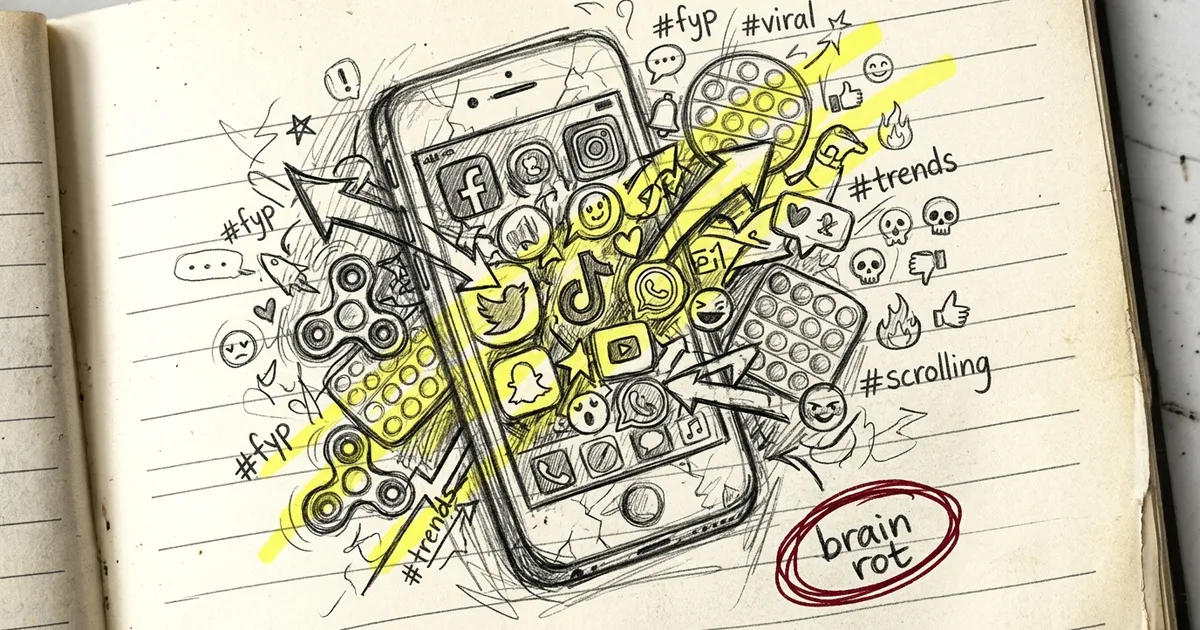
Short-form video platforms are engineered to keep you scrolling. Each clip delivers a small dopamine hit, just enough to keep your thumb moving but never enough to feel satisfied. Researchers at Swiss German University describe this as "zombie-scrolling", a state where the brain's reward system stays activated without the prefrontal cortex, the part responsible for executive function, ever fully engaging.
The numbers tell the story. A 2024 survey by Reviews.org found that Americans check their phones an average of 205 times per day, a 42.3% increase from the previous year. That's roughly once every five minutes during waking hours.
For kids, the effects are more pronounced. According to Nationwide Children's Hospital, brain rot refers to a decline in cognitive abilities such as attention, memory, and mood, and it happens when we overconsume low-effort, unchallenging content. The Jacob's Ladder Group notes that because the dopamine system reinforces instant gratification, children who frequently engage with screens may struggle with delayed reinforcement, self-control, and emotional resilience.
This isn't about demonizing screens. It's about understanding what happens when the brain's reward circuitry gets trained to expect constant, effortless stimulation.
What Happens to Focus Over Time
The pattern looks like this:
- Dopamine desensitization: Rapid-fire content trains the brain to expect frequent rewards. Slower, more demanding tasks (reading, studying, deep work) feel boring by comparison.
- Reduced sustained attention: Research from Shichida Australia links digital overload in children to shortened attention spans, reduced grey matter in areas tied to emotional regulation, and slower cognitive processing.
- The tolerance loop: Over time, more stimulation is required to achieve the same dopamine response. This mirrors the tolerance patterns seen in other reward-driven behaviors.
The average human attention span has dropped from 12 seconds in 2000 to 8.25 seconds according to a widely cited Microsoft study. Whether or not you trust that exact number, the directional trend is hard to argue with.
Should You Actually Worry About Brain Rot Toys?
Short answer: brain rot toys are fine. The screen habits that surround them deserve your attention.
A Bombardiro Crocodilo plush isn't going to impair your kid's cognitive development. Playing with physical toys, even weird ones, involves imagination, tactile engagement, and social interaction (trading, collecting, showing friends). That's all healthy.
The concern starts when brain rot toys become just an entry point back to the screen. When your kid wants the plush because they saw it on TikTok, and then they go back to TikTok for three more hours of brainrot content, the toy isn't the variable that matters. The content loop is.
A Practical Framework
Here's how to think about brain rot toys in your household:
- Physical play with brain rot toys? No problem. Collecting, trading, and imaginative play are all cognitively engaging activities.
- Watching brain rot content for hours to discover new characters? That's where the dopamine loop kicks in and attention starts to erode.
- Using brain rot toys as a conversation starter about digital habits? That's actually a smart move. The name itself opens the door.
The goal isn't to confiscate the Tung Tung Sahur plush. It's to make sure the screen time surrounding it doesn't become the default mode for your brain.
Brain Rot Toys and Adults: You're Not Immune
This isn't just a kids' problem. If you're an adult who spent 20 minutes reading about Italian Brainrot characters before landing on this article, you already know the pull.
The same dopamine mechanics apply to your brain. The same attention fragmentation happens when you bounce between Slack, Instagram, email, and a YouTube short every four minutes. The content is different. The neurochemistry is identical.
A 2024 survey found that 59% of employees report being unable to focus for even 30 minutes without getting sidetracked by a digital distraction. That's not a willpower failure. That's a trained response from years of stimulus-rich, effort-poor content consumption.
The brain rot toys trend is a mirror. It reflects a culture where attention has become the scarcest resource, not just for kids zoning out on TikTok, but for adults trying to do focused work in an environment designed to prevent exactly that.
Protecting Your Focus in a Brain Rot Toys World
Whether you're a parent concerned about your kid's screen habits or a professional who can't get through a report without checking your phone, the underlying problem is the same: your brain's reward system has been conditioned to expect constant, low-effort stimulation.
Fixing that requires deliberate inputs. Not willpower lectures. Actual neurochemical support.
Caffeine is the obvious starting point, but raw caffeine alone creates jitters and crashes that make sustained focus harder, not easier. The research points to smarter combinations. A study published on PubMed found that 97mg of L-theanine combined with 40mg of caffeine helped participants focus attention during demanding cognitive tasks, without the anxiety spike that caffeine produces on its own.
That specific pairing, caffeine plus L-theanine, works because it targets two systems at once: caffeine blocks adenosine (the neurotransmitter that makes you feel tired) while L-theanine promotes GABA activity and alpha brain waves associated with calm, alert focus.
This is the principle behind Roon, a zero-nicotine sublingual pouch built around 40mg of caffeine, L-theanine, theacrine, and methylliberine. The stack is designed to support sustained attention for 4 to 6 hours without the jitters, crash, or tolerance buildup that come from coffee or energy drinks. It targets the same neurochemical pathways, adenosine, GABA, and dopamine, that get disrupted by chronic overstimulation.
Brain rot toys aren't the enemy. The fog that settles in after hours of fragmented attention is. Cut through it.
READY TO UNLOCK YOUR FOCUS?
Subscribe for exclusive discounts and more content like this delivered to your inbox.