BRAIN ROT PICTURES: WHAT THEY ARE, WHY THEY SPREAD, AND WHAT THEY'RE DOING TO YOUR FOCUS
Roon Team
Brain Rot Pictures: What They Are, Why They Spread, and What They're Doing to Your Focus
You've seen them. The AI-generated Italian brainrot creatures with fake names like "Tralalero Tralala." The Skibidi Toilet edits. The deep-fried memes that make zero sense but somehow get 40 million views. Brain rot pictures have become the dominant visual language of the internet in 2025, and whether you find them hilarious or horrifying, they're worth understanding, because the science behind why they spread reveals something uncomfortable about what's happening to your ability to concentrate.
The term "brain rot" isn't new. It was first recorded in Henry David Thoreau's Walden, published in 1854. But in 2024, Oxford University Press named it their Word of the Year after its usage surged 230% in a single year. The modern definition? The cognitive decline and mental fatigue you get from overconsuming trivial online content. The brain rot pictures, memes, and short-form videos that fill your feed are both the symptom and the cause.
This article breaks down what brain rot pictures actually are, why your brain can't stop consuming them, and what the research says about their real cognitive cost.
Key Takeaways
- Brain rot pictures refer to absurd, low-effort visual content (memes, AI-generated images, surrealist edits) designed to be consumed and shared rapidly.
- The dopamine mechanics behind scrolling through this content mirror the same reward pathways activated by gambling.
- Heavy consumption of short-form visual content is linked to reduced attention spans, lower academic performance, and measurable changes in brain structure.
- Reclaiming your focus requires understanding the neurochemistry at play, not just willpower.
What Are Brain Rot Pictures, Exactly?
The phrase "brain rot pictures" covers a broad category of visual internet content defined by one shared trait: it requires almost no cognitive effort to consume.
Think of the Italian brainrot memes that went viral in early 2025. These are surrealist, AI-generated images of grotesque creatures given pseudo-Italian names, paired with synthesized voiceovers. They spread across TikTok and Instagram at a staggering rate, spawning fan-made storylines and even cryptocurrency meme coins. The content is deliberately absurd. That's the point.
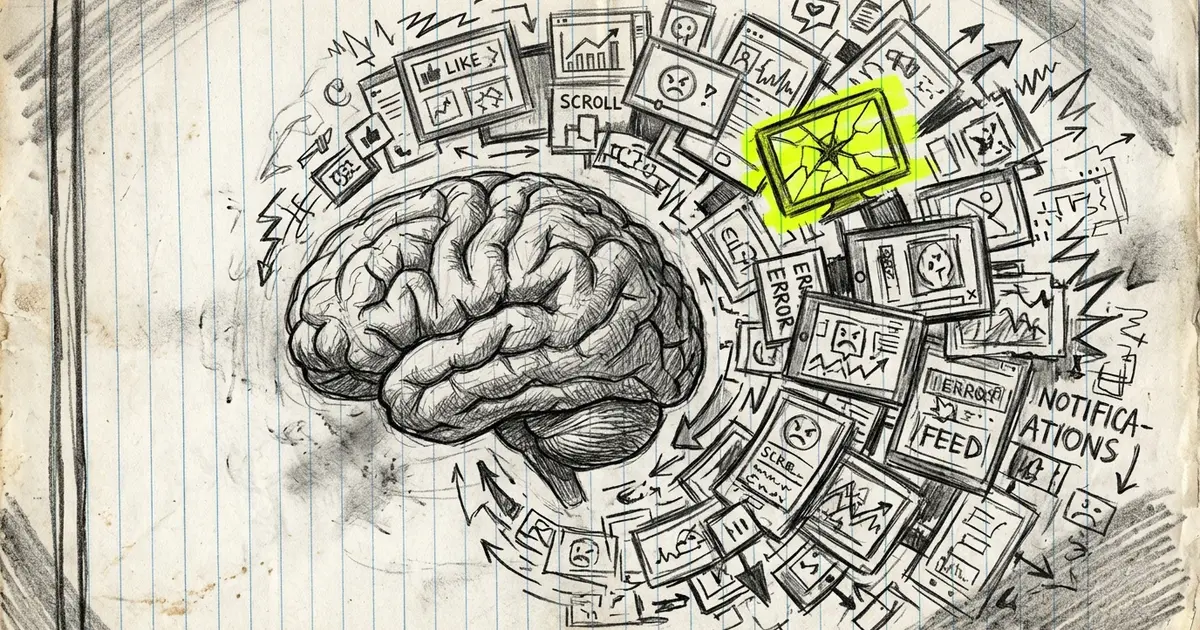
Before Italian brainrot, there was Skibidi Toilet. Before that, deep-fried memes, "sigma" edits, and an endless stream of reaction images designed to be consumed in under two seconds. Brain rot pictures aren't one specific format. They're any visual content optimized for maximum engagement with minimum substance.
The term also extends to the broader ecosystem of short-form video clips, AI-generated images, and algorithmically promoted visual content that fills platforms like TikTok, Instagram Reels, and YouTube Shorts. If it makes you scroll faster and think less, it qualifies as brain rot pictures in the modern sense.
Why Your Brain Can't Stop Looking at Brain Rot Pictures
Here's where it gets interesting. Brain rot pictures aren't popular because people are stupid. They're popular because they're engineered to exploit specific neurochemical systems in your brain.
The Dopamine Loop
Every time you scroll past a brain rot picture that makes you laugh, surprises you, or confuses you just enough to keep swiping, your brain releases a small hit of dopamine. A 2025 paper published in SAGE Journals describes "dopamine-scrolling" as a distinct behavioral pattern where small doses of dopamine are released with each scrolling motion, coupled with variable reward schedules that can lead to tolerance development.
That last part matters. Variable reward schedules. It's the same mechanism that makes slot machines addictive. You don't know which swipe will deliver the next hit of absurdist humor or shock value, so you keep swiping. The uncertainty is the hook.
The Addiction Parallel
This isn't metaphor. Research published in PMC found that social media engages brain reward pathways similar to those seen in addictive behavior, with extended Beta and Gamma brain wave activity that can interfere with emotional regulation and attention. Likes, comments, and the visual novelty of brain rot pictures all stimulate the ventral striatum, a region rich in dopamine that handles reward anticipation.
Brain scans of college students using short-form video platforms showed that areas of the brain involved in addiction were highly activated in those who watched personalized video feeds. Some participants had difficulty controlling when to stop watching. The rapid scrolling of videos shares the same fundamental principles that make gambling on slot machines addictive, a concept researchers call "random reinforcement."
The Cognitive Cost of Brain Rot Pictures
Laughing at a few absurd memes won't destroy your brain. But the pattern of consumption, hours of passive scrolling through brain rot pictures and low-effort visual content, has measurable effects on cognition.
Your Attention Span Is Paying the Price
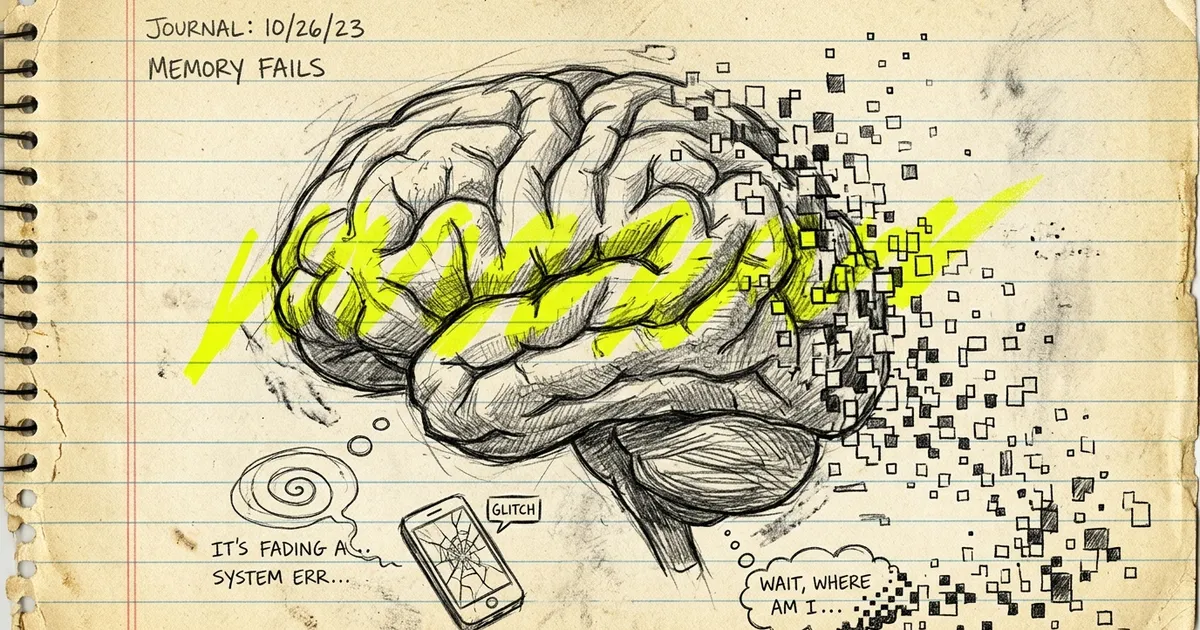
A narrative review covering research from 2019 to 2025 found that heavy use of TikTok and similar short-form media is associated with shorter attention spans, poorer academic performance, and abnormal white matter in brain regions linked to behavioral control. This isn't speculation. It's structural change visible on brain scans.
The numbers on screen time tell part of the story. According to DemandSage, the average person now spends 6 hours and 54 minutes on screens daily. Americans average over 7 hours. Gen Z clocks roughly 9 hours per day. That's more time staring at screens than sleeping, and a large share of that time goes to consuming brain rot pictures and similar content.
It's Not Just Time. It's Content Quality.
A 2025 review article in PMC specifically examined "brain rot" as a clinical concept, defining it as the cognitive decline and mental exhaustion experienced due to excessive exposure to low-quality online materials, especially on social media. The review focused on adolescents and young adults, the demographics most likely to be consuming brain rot pictures daily.
The distinction between "screen time" and "brain rot" is worth making. Two hours spent reading long-form articles or learning a new skill on your laptop is not the same as two hours of passive meme scrolling. The cognitive cost comes from the type of content, not just the time spent.
Even AI Gets Brain Rot
Here's a telling detail. Researchers from Texas A&M University found that continual exposure to short, viral social media posts "induces lasting cognitive decline in large language models." When they fed months of junk Twitter data to AI models, the models showed measurable cognitive breakdown. Even after retraining with high-quality data, the impairments couldn't be fully repaired.
If low-quality content can permanently degrade an AI system's reasoning ability, it's worth asking what brain rot pictures and similar junk content do to your biological neural networks over months and years of daily exposure.
The Neurochemistry Behind the Fog
When people talk about "brain rot," they're usually describing something that neuroscientists would recognize as a cluster of related effects: difficulty sustaining attention, reduced working memory, mental fatigue, and a general sense of cognitive sluggishness. In clinical terms, this overlaps heavily with what's commonly called brain fog.
Three neurochemical systems are central to this:
| System | Role | How Brain Rot Content Affects It |
|---|---|---|
| Dopamine | Drives motivation, reward-seeking, and focus | Constant micro-rewards from scrolling create tolerance, reducing baseline motivation |
| Adenosine | Builds up during wakefulness, promotes sleepiness | Disrupted sleep from late-night scrolling increases adenosine buildup, worsening mental fatigue |
| GABA | Primary inhibitory neurotransmitter, regulates calm and focus | Overstimulation from rapid content switching can dysregulate GABA signaling, contributing to restlessness |
The dopamine piece is the most well-documented. When you train your brain to expect a reward every few seconds (the pace of scrolling through brain rot pictures), tasks that require sustained attention for minutes or hours start to feel unbearable. Your reward threshold shifts. Normal work, reading, conversation: none of it delivers dopamine at the rate your brain has learned to expect.
This is tolerance, the same mechanism described in the SAGE Journals paper on dopamine-scrolling. And it explains why so many people report feeling foggy, unmotivated, and unable to focus after long sessions spent consuming brain rot pictures.
How to Fight Back Against Brain Rot Pictures
Knowing the mechanism is the first step. Here's what actually works, based on the research:
1. Audit Your Content Diet
Track your screen time for one week. Not just total hours, but what you're actually consuming. Most phones have built-in tools for this. The goal isn't zero screen time. It's shifting the ratio from passive consumption of brain rot pictures to active, intentional use.
2. Create Friction
Remove short-form video apps from your home screen. Turn off autoplay. Add a 10-second delay before opening social media. These small barriers interrupt the automatic scrolling loop and give your prefrontal cortex a chance to override the impulse.
3. Rebuild Your Attention in Blocks
If your attention span has shortened, you can train it back. Start with 15-minute focused work blocks with no phone access. Add five minutes each week. Your brain's capacity for sustained focus is a skill, and like any skill, it responds to practice.
4. Support the Neurochemistry
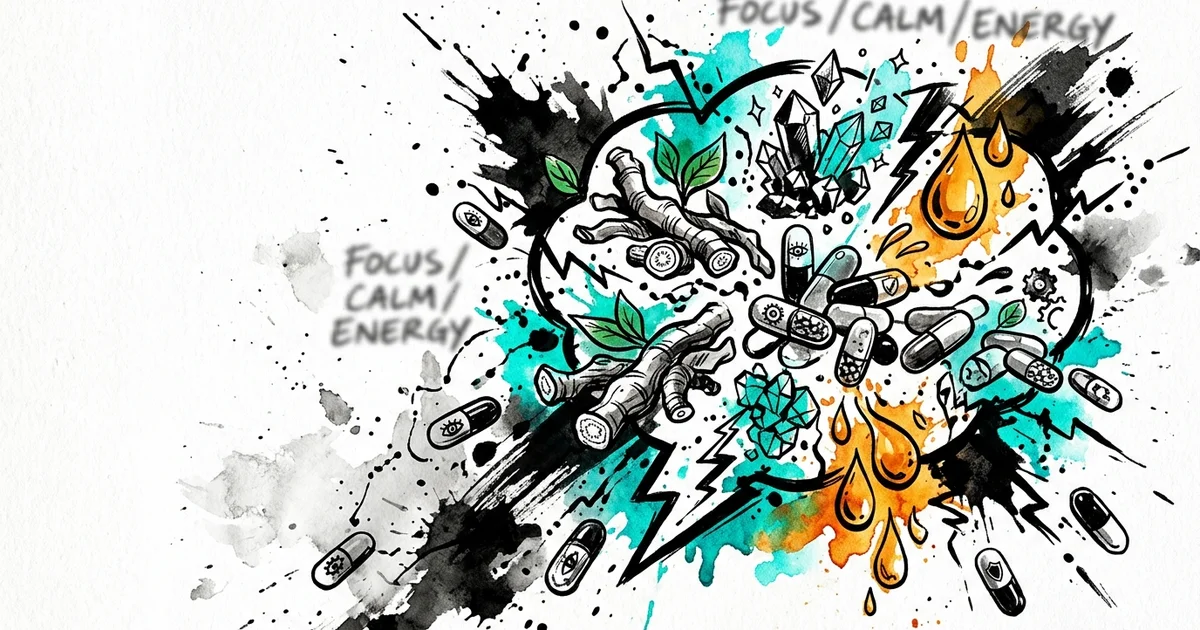
The three systems most disrupted by excessive content consumption (dopamine, adenosine, and GABA) are also the systems most responsive to targeted nutritional support. Caffeine blocks adenosine receptors, reducing the sensation of mental fatigue. L-Theanine modulates GABA activity, promoting calm focus without sedation. And compounds like Theacrine and Methylliberine work on dopamine and adenosine pathways to sustain alertness without the tolerance buildup that caffeine alone can cause.
Cut Through the Fog That Brain Rot Pictures Create
Brain rot pictures aren't going away. The algorithms that promote them are only getting better at keeping you scrolling. The question isn't whether you'll encounter this content. It's whether your brain has the neurochemical support to snap out of the loop and get back to focused work.
Roon was built for exactly this. It's a zero-nicotine sublingual pouch that combines Caffeine (40mg), L-Theanine, Theacrine, and Methylliberine, targeting the adenosine, GABA, and dopamine pathways that brain rot pictures disrupt. No jitters. No crash. Just 4 to 6 hours of sustained, clean focus when you need to stop scrolling and start performing.
Your feed will still be full of AI-generated Italian creatures and Skibidi edits tomorrow morning. The difference is whether you spend 10 seconds laughing at brain rot pictures or 90 minutes lost in the scroll. That's a neurochemistry problem. And it has a solution.
READY TO UNLOCK YOUR FOCUS?
Subscribe for exclusive discounts and more content like this delivered to your inbox.