THE BEST ALTERNATIVES FOR VAPING WORTH TRYING IN 2026
Roon Team
The Best Alternatives for Vaping Worth Trying in 2026
Finding reliable alternatives for vaping is one of the hardest health decisions you can make. And the data backs that up: a 2025 study published in JAMA Network Open found that among youth who vape daily, 53% tried to quit and failed between 2020 and 2024. That number nearly doubled in four years.
So if you're searching for alternatives for vaping, you're not alone, and you're not weak. You're dealing with one of the most addictive substances on the planet, delivered through a device engineered to make quitting feel impossible.
The good news? The category of safe alternatives to vaping has expanded well beyond nicotine patches and willpower. From flavored air devices to zero-nicotine performance pouches, there are real options now. Here's what actually works, what doesn't, and what the science says about each.
Key Takeaways
- Flavored air devices address the hand-to-mouth habit but don't touch nicotine withdrawal.
- Nicotine replacement therapy (NRT) remains the most clinically validated quit method.
- Behavioral tools like exercise and mindfulness reduce cravings at the neurological level.
- Zero-nicotine functional pouches offer the oral ritual plus a cognitive boost, without the addiction.
Why Finding Real Alternatives for Vaping Is So Hard
Nicotine rewires your brain's reward circuitry. Every puff floods your nucleus accumbens with dopamine, and over time, your baseline drops. Without nicotine, you feel flat, irritable, foggy. According to the National Cancer Institute, the most common withdrawal symptoms include anger, frustration, and irritability, peaking within the first week and lasting up to four weeks.
But here's the part most people miss: vaping isn't just a chemical addiction. It's a behavioral one. The hand-to-mouth motion, the inhale, the five-minute break from your desk. These rituals get wired into your daily routine just as deeply as the nicotine itself.
That's why the best alternatives for vaping address both layers: the chemical dependency and the physical habit. Any approach that only targets one is setting you up to relapse.
Flavored Air to Quit Vaping: Do These Devices Work?
Flavored air devices are the newest category in the quit-vaping space. Using flavored air to quit vaping delivers exactly what the name suggests: flavored, nicotine-free air through a device that mimics the feel of a vape.
The Major Players
| Device | What It Does | Price Range |
|---|---|---|
| CAPNOS Zero | Pressurized air with a patent-pending valve for throat hit; no vapor, no battery | ~$15-20 |
| Füm | Essential oil aromatherapy inhaler with replaceable flavor cores and adjustable airflow | ~$25-35 |
| QuitGo | Nicotine-free inhaler designed to mimic the shape and feel of a cigarette | ~$10-15 |
CAPNOS has shipped over 90,000 devices to 93 countries since launching in 2022. Their approach is purely mechanical: a silicone valve creates pressurized resistance that simulates the throat hit of a real vape. No electronics. No vapor. No chemicals.
Füm takes a different angle. It uses essential oil cores to deliver flavor through passive airflow. The device has a fidget-friendly barrel and adjustable draw, which appeals to people who need something in their hands.
The Honest Assessment
These devices are good alternatives to vaping if your primary struggle is the behavioral habit. They satisfy the oral fixation and the hand-to-mouth ritual. But flavored air to quit vaping does nothing for nicotine withdrawal. If you're physically dependent on nicotine, flavored air alone probably won't get you through the first two weeks.
A review from Beaumont Children's Hospital also raises a fair point: while flavored air devices are marketed as safe alternatives to vaping, the long-term safety of inhaling essential oils and plant extracts hasn't been proven yet. They're almost certainly safer than inhaling nicotine vapor, but "safer" and "safe" aren't the same thing.
Think of flavored air to quit vaping as one tool in a larger toolkit, not a standalone solution.
Nicotine Replacement Therapy: The Clinical Standard
NRT has decades of clinical data behind it, making it one of the most studied alternatives for vaping on the market. The Smokefree.gov resource from the U.S. government notes that using the nicotine patch can double your chances of quitting successfully.
The five FDA-approved NRT formats:
- Patches (21mg, 14mg, 7mg): Continuous, slow-release nicotine delivery. Best for baseline cravings.
- Gum (2mg, 4mg): On-demand nicotine when cravings spike.
- Lozenges: Similar to gum but dissolve in your mouth. No chewing required.
- Nasal spray: Fastest delivery of any NRT. Prescription only.
- Inhalers: Prescription devices that mimic the hand-to-mouth action.
The American Academy of Pediatrics recommends pairing a long-acting form (like a patch) with a shorter-acting form (like gum or a lozenge) for best results.
The Catch With NRT
NRT replaces one nicotine source with another. That's the point, and it works well for tapering. But some people stay on NRT for months or years, never fully breaking the chemical dependency. If your goal is to be completely nicotine-free, NRT is a bridge, not a destination. That's why many people combine NRT with other alternatives for vaping to build a more complete quit plan.
Behavioral and Lifestyle Alternatives for Vaping
Some of the most effective tools for quitting don't come in a package. These good alternatives to vaping rely on your body's own neurochemistry.
Exercise
Physical activity directly reduces nicotine cravings. It triggers dopamine and endorphin release through pathways that overlap with nicotine's reward system, essentially giving your brain an alternative source of the neurochemicals it's missing.
You don't need to run a marathon. A 20-minute walk, a quick bodyweight circuit, or even a set of push-ups during a craving can blunt the urge long enough for it to pass. Most cravings last only 10 to 15 minutes. As far as safe alternatives to vaping go, exercise is one of the most accessible.
Mindfulness and Breathwork
A study from the Proceedings of the National Academy of Sciences found that just two weeks of mindfulness-based meditation training produced a measurable reduction in smoking behavior and cravings. The mechanism? Mindfulness strengthens the prefrontal cortex's ability to override the impulse signals from your limbic system.
The CDC's quit-smoking resources also recommend deep breathing as a practical tool for managing the restlessness and irritability that come with nicotine withdrawal. Breathwork is among the most underrated alternatives for vaping because it costs nothing and works anywhere.
Cold Turkey (With a Caveat)
Some people quit cold turkey and never look back. But the data suggests this is the exception, not the rule. The JAMA Network Open study mentioned earlier found that unsuccessful quit attempts among daily vapers nearly doubled between 2020 and 2024. Willpower alone has a low success rate when you're fighting a chemical dependency.
The Cleveland Clinic puts it bluntly: the first week after quitting is when you're most vulnerable, and it often takes several tries to quit for good. That's not a personal failing. That's pharmacology.
If you go cold turkey, pair it with at least one behavioral support: an app, a support group, a therapist, or some combination of the alternatives for vaping listed here.
Zero-Nicotine Functional Pouches: A New Category
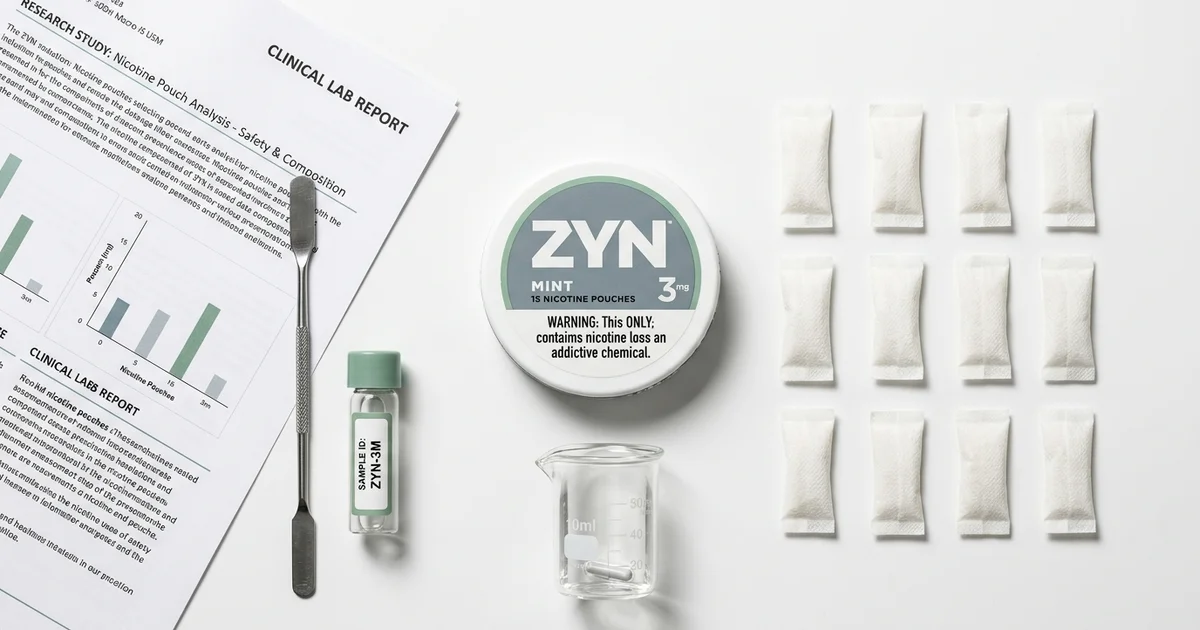
Here's where the market has gotten interesting. A new generation of pouches has emerged that contains zero nicotine but delivers functional ingredients sublingually (under the lip, absorbed through the oral mucosa). These pouches represent some of the most promising good alternatives to vaping available today.
These aren't nicotine replacements. They're designed for people who want the oral ritual of a pouch, the cognitive lift they associate with nicotine, but none of the addiction.
The Science Behind the Stack
The most effective formulations pair caffeine with L-theanine, an amino acid found naturally in tea. A study on PubMed tested exactly this combination (40mg caffeine + 97mg L-theanine) and found it improved accuracy during task-switching, increased alertness, and reduced tiredness, all at statistically significant levels.
Some formulations go further, adding theacrine and methylliberine, two compounds structurally related to caffeine. A randomized, placebo-controlled trial published in the Journal of the International Society of Sports Nutrition found that a combination of caffeine, methylliberine, and theacrine matched the vigilance benefits of double the dose of caffeine alone, without the spike in blood pressure.
What does that mean in practice? You get sustained focus without jitters, without a crash, and without building tolerance the way you do with caffeine or nicotine alone. For people exploring safe alternatives to vaping, this kind of functional pouch checks a lot of boxes.
A separate study published in Cureus tested this exact combination (caffeine + theacrine + methylliberine) in 50 young male esports players and found measurable improvements in cognitive performance and reaction time without negative effects on mood. The stack worked, and it worked without the side effects people typically associate with high-dose stimulants.
How to Build Your Quit-Vaping Toolkit
There's no single perfect option among alternatives for vaping. The most effective approach combines multiple tools based on what you're actually struggling with.
| Your Primary Struggle | Best Tools |
|---|---|
| Hand-to-mouth habit | Flavored air device (CAPNOS, Füm) |
| Nicotine withdrawal | NRT (patch + gum combo) |
| Stress and irritability | Exercise, mindfulness, breathwork |
| Brain fog and low focus | Zero-nicotine functional pouches |
| All of the above | Combine 2-3 of these tools |
A 2025 survey from Truth Initiative found that 67% of young adults using nicotine plan to quit, with physical and mental health as their top motivators. The intention is there. The alternatives for vaping just need to match the problem.
Focus Without Nicotine
If what you actually liked about vaping was the mental edge, the sharpness, the ability to lock in, then the real question isn't how to replace nicotine. It's how to get that cognitive lift without the dependency. That's the gap the best alternatives for vaping should fill.
That's the premise behind Roon. It's a zero-nicotine sublingual pouch built on a stack of caffeine (40mg), L-theanine, theacrine, and methylliberine, the same compounds backed by the clinical research above. You get 4 to 6 hours of sustained focus. No jitters. No crash. No tolerance buildup. No addiction risk.
Roon won't fix nicotine withdrawal on its own. But for the focus piece, the part of vaping you actually want to keep, it's one of the cleanest alternatives for vaping that doesn't come with a dependency you'll need to quit later.
Try Roon at takeroon.com.
READY TO UNLOCK YOUR FOCUS?
Subscribe for exclusive discounts and more content like this delivered to your inbox.