NICOTINE POUCHES VS. VAPING: A HEAD-TO-HEAD COMPARISON
Roon Team
Nicotine Pouches vs. Vaping: A Head-to-Head Comparison
The debate over nicotine pouches vs vaping is dominating Reddit threads, group chats, and break rooms right now. You're choosing between two habits that both promise a cleaner nicotine hit than cigarettes. Both ditch the combustion. Both come in flavors that taste like a dessert menu. And both are marketed as the "smarter" choice.
But smarter than cigarettes is a low bar. The real question in the nicotine pouches vs vaping discussion is what each one actually does to your body, your brain, and your daily performance over time.
Key Takeaways
- Nicotine pouches skip your lungs entirely but still deliver nicotine (and its full addiction profile) through your gums.
- Vaping exposes your airways to chemicals like formaldehyde and acetaldehyde that don't belong in lung tissue.
- Both options create nicotine dependence, tolerance buildup, and withdrawal symptoms.
- A third category exists: nicotine-free pouches designed for cognitive performance without the addiction loop.
What Are Nicotine Pouches?
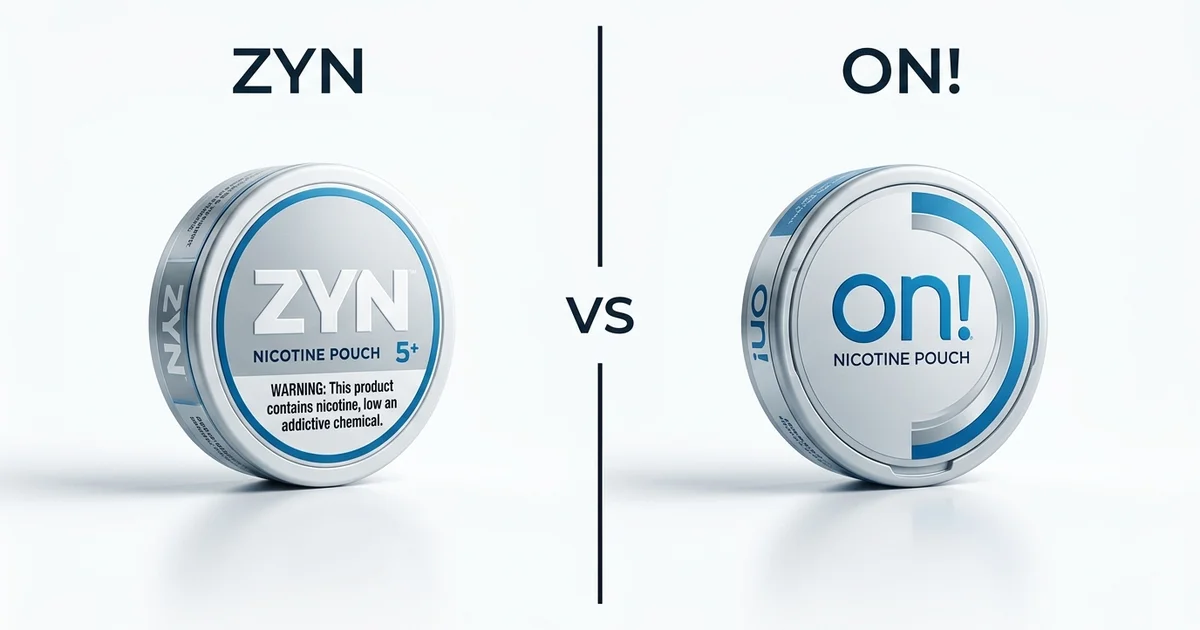
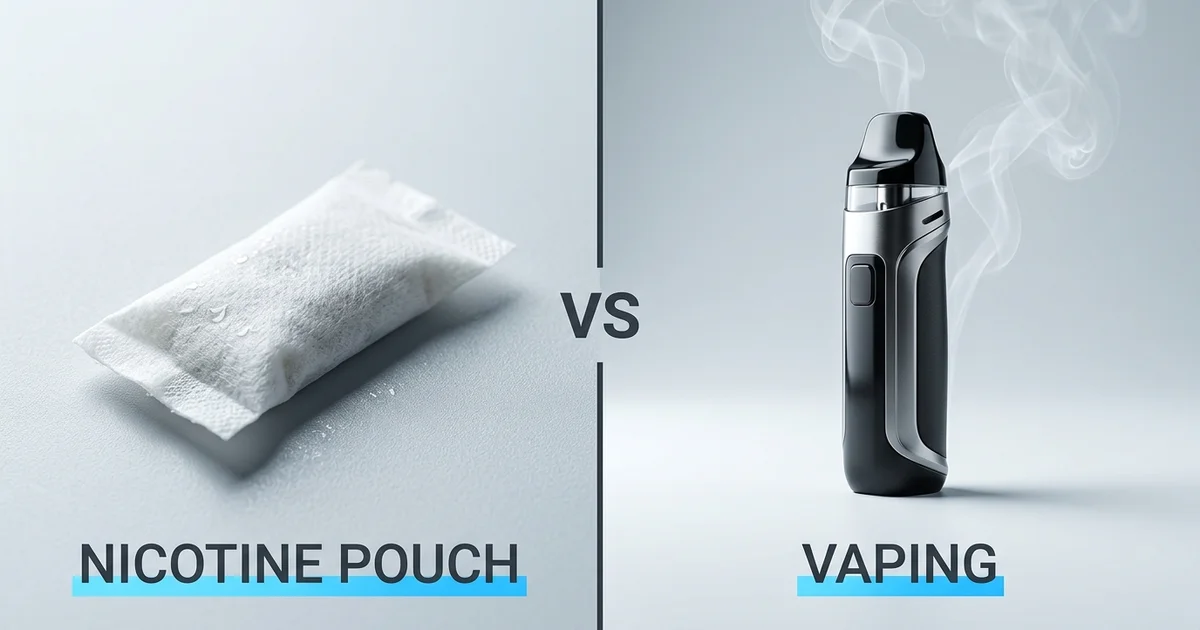
To understand nicotine pouches vs vaping, you first need to know what each product actually is. Nicotine pouches are small, white, pre-portioned packets you tuck between your upper lip and gum. The nicotine absorbs through your oral mucosa (the lining of your mouth) and enters your bloodstream without any smoke, vapor, or spit.
Brands like Zyn, On!, and Velo dominate this space. In the United States, Zyn is sold in 3 and 6 mg strengths, Velo in 2, 4, and 7 mg, and On! in 1.5, 2, 3.5, 4, and 8 mg. The experience is discreet. No device, no cloud, no charging cable. You pop one in and go about your day.
The pouches contain nicotine extracted from tobacco leaves along with food-grade ingredients, and the pouches themselves are made of plant fibers. They're technically tobacco-free (no leaf in the pouch), but the nicotine itself still comes from the tobacco plant.
What Is Vaping?
Vaping uses a battery-powered device to heat a liquid (usually containing propylene glycol, vegetable glycerin, nicotine, and flavorings) into an aerosol you inhale. Nicotine enters your bloodstream through your lungs, which means absorption is fast. Very fast.
That speed is part of the appeal and part of the problem. Rapid nicotine delivery to the brain strengthens the reinforcement loop that keeps you reaching for the device every 15 minutes.
Modern disposable vapes can pack anywhere from 20 mg/mL to 50 mg/mL of nicotine salt, delivering a concentrated dose per puff that rivals or exceeds a traditional cigarette. This delivery difference is central to the nicotine pouches vs vaping comparison.
Nicotine Pouches vs Vaping: The Full Breakdown
Delivery Method
This is the most obvious difference in the nicotine pouches vs vaping matchup. Pouches use sublingual/buccal absorption (through the mouth). Vaping uses pulmonary absorption (through the lungs).
Why does this matter? Your lungs were designed to exchange oxygen and carbon dioxide. They were not designed to process heated chemical aerosols multiple times per hour. Your oral mucosa, while not invincible, is at least built to handle foreign substances (that's literally what eating is).
Chemical Exposure
Here's where vaping starts losing ground in the nicotine pouches vs vaping debate.
E-cigarette liquids are typically solutions of propylene glycol, glycerol, or both, plus nicotine and flavorant chemicals. Researchers have observed that formaldehyde-containing hemiacetals can be formed during the vaping process. That finding, published in the New England Journal of Medicine, raised serious questions about long-term inhalation risks.
Acrolein can damage the lining of the lungs, and acetaldehyde, a probable human carcinogen, can irritate the eyes, skin, and respiratory tract. These aren't obscure chemicals. Formaldehyde is a known carcinogen. Acrolein is used as a pesticide. And you're pulling them into the most delicate tissue in your body.
Nicotine pouches avoid this problem entirely. No heating element means no thermal degradation of chemicals, no aerosol, and no lung exposure. Nicotine pouches do carry their own oral health considerations: they can still cause gum irritation, and prolonged use might lead to gum recession or sensitivity.
| Factor | Nicotine Pouches | Vaping |
|---|---|---|
| Delivery | Oral (gum absorption) | Pulmonary (lung absorption) |
| Lung Exposure | None | Yes (aerosol + chemicals) |
| Known Chemicals | Nicotine, food-grade fillers, flavorings | Nicotine, propylene glycol, glycerol, formaldehyde, acetaldehyde, acrolein, flavor chemicals |
| Oral Health Risk | Gum irritation, possible recession | Dry mouth, throat irritation |
| Nicotine Addiction | Yes | Yes |
| Discretion | High (no vapor, no smell) | Low to moderate (visible cloud, scent) |
| Device Required | No | Yes (battery, coil, charger) |
The Addiction Equation
This is the part of nicotine pouches vs vaping that both categories would prefer you not think about too hard.
Whether you choose pouches or vapes, you're still consuming nicotine. And nicotine is one of the most addictive substances on the planet. It hijacks your dopamine system, creating a cycle where you need the substance just to feel normal, not to feel enhanced.
Tolerance builds quickly. The 3 mg pouch that gave you a buzz in week one barely registers by month three. The same applies to your vape. You start at 20 mg/mL and find yourself reaching for 50 mg/mL within a few months. This isn't a failure of willpower. It's basic neuropharmacology.
And here's what neither product's marketing will tell you: nicotine doesn't actually improve cognitive performance in non-dependent users. The "focus" you feel after a pouch or a vape hit is just your brain returning to its baseline after withdrawal pulled it below. You're not getting sharper. You're getting back to zero. That reality applies equally to both sides of the nicotine pouches vs vaping equation.
Long-Term Health Data
The long-term health impact of nicotine pouches is still unknown. They are not technically categorized as smokeless tobacco, so the FDA doesn't regulate them the same way. That's a point raised by the University of Nebraska Health Center, and it's worth sitting with.
Vaping has a slightly longer track record, and the data isn't reassuring. Inhaling these chemicals over time may cause inflammation of the airways and damage to lung tissue, which in turn can lead to chronic respiratory diseases. The American Lung Association has been direct about the risks.
The honest answer for anyone weighing nicotine pouches vs vaping? Neither option has 20+ years of epidemiological data behind it. Both are almost certainly less harmful than combustible cigarettes. But "less harmful than cigarettes" is like saying "less dangerous than juggling chainsaws." The bar is underground.
Cost Comparison
A can of Zyn (15-20 pouches) runs about $4-6 depending on your state. If you're going through a can a day, that's $120-180 per month.
Disposable vapes cost $8-15 each and last anywhere from a day to a week depending on usage. A moderate vaper spends $60-150 per month. Heavy users blow past that easily, especially if they're buying premium devices and separate e-liquid.
Neither side of the nicotine pouches vs vaping comparison is cheap. Both get more expensive as tolerance pushes consumption up.
Social and Practical Factors
Pouches win the convenience game by a wide margin. No device to charge. No cloud to explain. No "is that allowed in here?" conversations. You can use one in a meeting, on a plane, or at your desk without anyone knowing.
Vaping requires hardware, maintenance, and a willingness to be the person pulling out a device in public. Some people don't mind. But the trend in most workplaces and social settings is moving against visible nicotine use of any kind. On this front, nicotine pouches vs vaping has a clear winner in terms of discretion.
The Question Nobody's Asking
Most people frame nicotine pouches vs vaping as a two-option decision. But that framing assumes you need nicotine in the first place.
If what you actually want is sustained focus, better concentration, and a clean energy source you can use without pulling out a vape or lighting anything up, the answer might not involve nicotine at all.
That's the premise behind Roon. It's a sublingual pouch (same form factor as a nicotine pouch) built with a stack of caffeine (40 mg), L-Theanine, Theacrine, and Methylliberine. Zero nicotine. No addiction curve. No tolerance buildup. Just 4-6 hours of clean, sustained focus.
| Factor | Nicotine Pouches | Vaping | Roon |
|---|---|---|---|
| Nicotine | Yes | Yes | None |
| Addiction Risk | High | High | None |
| Tolerance Buildup | Yes | Yes | No |
| Lung Exposure | None | Yes | None |
| Duration | 20-30 min buzz | Variable | 4-6 hours sustained focus |
| Cognitive Benefit | Perceived (withdrawal relief) | Perceived (withdrawal relief) | Actual (nootropic stack) |
The difference is simple. Nicotine borrows focus from your future self and charges interest. A nootropic stack built on L-Theanine and Theacrine actually supports the neurochemistry behind attention and alertness without creating a debt you have to keep paying.
The Bottom Line on Nicotine Pouches vs Vaping
If you're comparing nicotine pouches vs vaping strictly on harm reduction, pouches have the edge. No lung exposure, fewer toxic chemicals, and a more discreet form factor. But both options chain you to nicotine dependence, and that dependence will cost you money, freedom, and the cognitive baseline you started with.
The better question isn't which side of nicotine pouches vs vaping is least bad. It's whether you need nicotine at all.
READY TO UNLOCK YOUR FOCUS?
Subscribe for exclusive discounts and more content like this delivered to your inbox.