ATTENTION SPAN DEFINITION: WHAT SCIENCE ACTUALLY SAYS (AND WHY IT MATTERS)
Roon Team
Attention Span Definition: What Science Actually Says (And Why It Matters)
You sat down to read this article. Before you finish the first paragraph, there's a decent chance something will pull your focus away. A notification. A tab you forgot to close. The vague urge to check your phone. The attention span definition most people carry around is wrong, and that misunderstanding is costing them more than they realize.
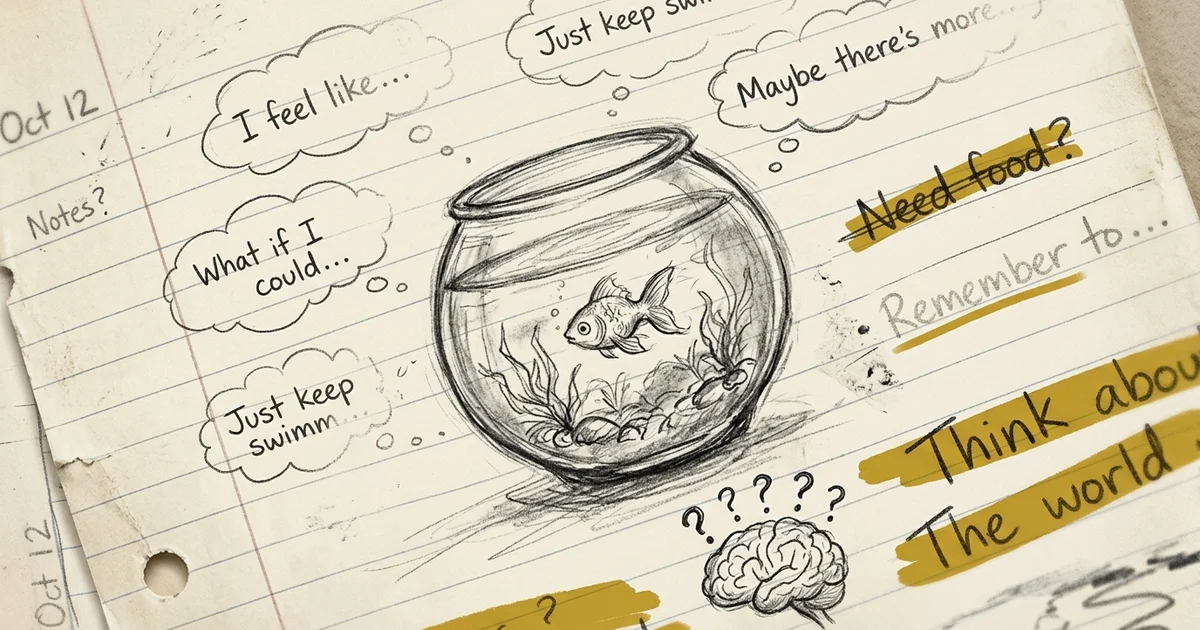
The attention span definition is not a single number. It is not a fixed trait, like your height. And it is absolutely not shorter than a goldfish's. That claim, which spread like wildfire after a 2015 Microsoft Canada report, was based on shaky methodology and has been debunked repeatedly by researchers. The real picture is more useful and more interesting.
Key Takeaways:
- The attention span definition refers to your ability to maintain focus on a task, and it comes in several distinct types.
- The "8-second goldfish" stat is a myth. But our on-screen focus has measurably declined.
- Neuroscience shows attention is driven by specific brain chemicals, not willpower alone.
- Understanding the correct attention span definition gives you a real framework for improving it.
What Is Attention Span? The Real Attention Span Definition
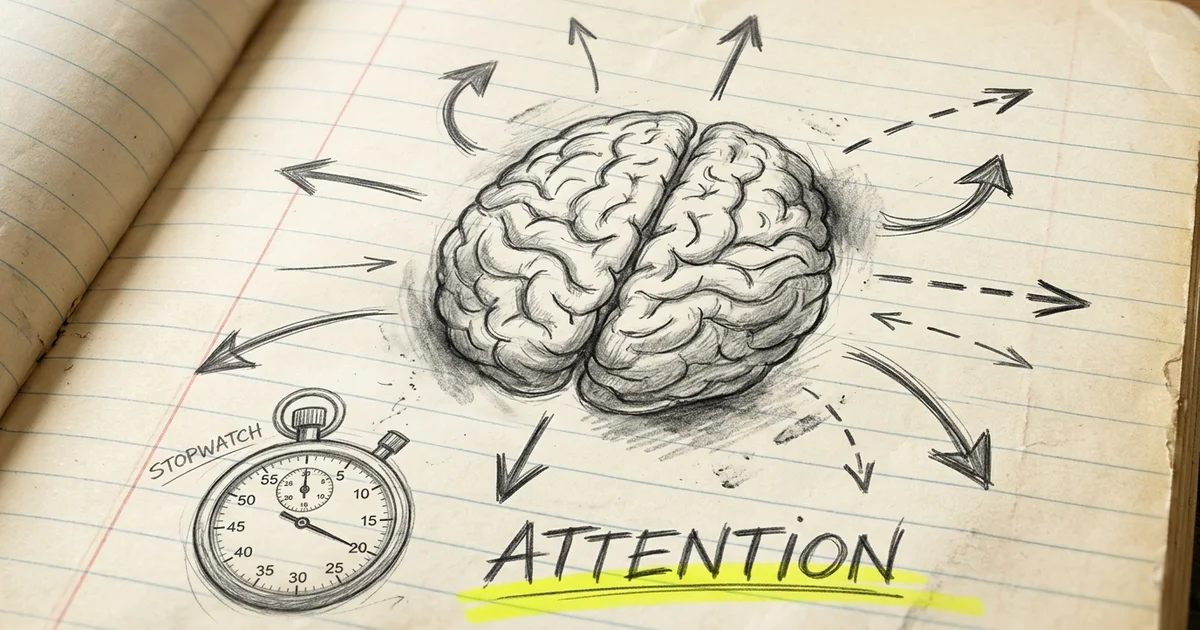
The clinical attention span definition is straightforward: it is the length of time you can concentrate on a task or stimulus without becoming distracted. But that simplicity hides a lot of nuance.
Neuroscientists break the attention span definition into several distinct types:
- Sustained attention: Staying locked on one task for an extended period. Reading a long report. Watching a lecture without checking your phone.
- Selective attention: Filtering out irrelevant noise to focus on what matters. Working in a loud coffee shop and still getting things done.
- Alternating attention: Shifting your focus between tasks that require different cognitive demands. Switching between writing an email and reviewing a spreadsheet.
- Divided attention: Processing multiple streams of information at once. Listening to a podcast while cooking dinner.
When most people say "my attention span is terrible," they usually mean their sustained attention is suffering. That is the type most under siege right now, and it is the one most central to any practical attention span definition.
The Goldfish Myth (And What the Numbers Actually Show)
The "humans have a shorter attention span than a goldfish" headline refuses to die. The original claim put human attention at 8 seconds, one second less than a goldfish's supposed 9-second span. Researchers have traced this stat back to no credible scientific source. The goldfish number itself appears to be fabricated, yet it continues to distort how people think about the attention span definition.
But here is what is real: our focus on screens has dropped.
Dr. Gloria Mark, a professor of informatics at UC Irvine, has tracked on-screen attention for nearly two decades. Her research found that the average time people spend on a single screen before switching dropped to 47 seconds, with a median of just 40 seconds. In 2004, that number was closer to 2.5 minutes.
That is a steep decline. And the downstream effects are measurable. According to research compiled by Speakwise, 59% of employees report being unable to focus for even 30 minutes without a digital distraction pulling them away. A workplace behavior analysis cited by Amra and Elma found that the average time adults spend on a single project before switching has dropped to 9.8 minutes.
This is not about goldfish. It is about the real, documented erosion of sustained focus in environments saturated with digital interruptions. Any honest attention span definition must account for the environment in which attention operates.
What Controls Your Attention Span? The Neurochemistry
The attention span definition tells you what attention is. Neurochemistry tells you how it works. Attention runs on specific neurotransmitter systems, and when those systems are disrupted, your focus falls apart regardless of how motivated you are.
Dopamine: The "Salience" Signal
Dopamine does not simply make you feel good. It tells your brain what is worth paying attention to. When dopamine signaling is healthy, you can lock onto a task and stay there. When it is dysregulated, often by constant micro-rewards from notifications and social media, everything feels equally important. Nothing gets deep focus. This is why the attention span definition is incomplete without understanding dopamine's role.
Adenosine: The Fatigue Switch
Adenosine is a byproduct of neural activity that accumulates throughout the day. As levels rise, your brain's signal-to-noise ratio drops. You feel foggy. Tasks that were easy at 9 AM become a grind by 2 PM. Caffeine works primarily by blocking adenosine receptors, temporarily restoring alertness by preventing the fatigue signal from landing.
GABA: The Noise Filter
Gamma-aminobutyric acid (GABA) is your brain's primary inhibitory neurotransmitter. It quiets background neural activity so the signals that matter can come through clearly. Too little GABA activity and your brain becomes noisy, making selective attention harder. L-Theanine, an amino acid found in tea, has been shown to modulate GABA activity, which is one reason the combination of L-Theanine and caffeine outperforms caffeine alone in attention tasks.
Why Your Attention Span Feels Worse Than It Used To
The decline is not imaginary, and it is not entirely your fault. Three forces are working against your sustained attention every day, and each one challenges the attention span definition in a different way.
1. Digital Environment Design
Apps are engineered to interrupt you. Every notification is a trigger designed to break your current focus and redirect your attention. The average American checks their phone once every five minutes during waking hours. That is not a personal failing. It is a response to a system designed to fragment your focus.
2. Sleep Deprivation
Sleep is when your brain clears adenosine and consolidates the neural connections that support attention. Chronic sleep debt means you start each day with elevated adenosine levels and weakened prefrontal cortex function, the exact brain region responsible for sustained attention. No attention span definition captures how badly poor sleep degrades focus.
3. Cognitive Overload
Your working memory has a limited capacity, roughly four to seven items at any given time. When your environment constantly demands that you track emails, messages, meetings, and tasks simultaneously, that capacity gets overwhelmed. The result feels like brain fog, but it is actually your attentional system hitting its ceiling.
How to Actually Improve Your Attention Span
Knowing the attention span definition is step one. Doing something about it is step two.
Reduce switch costs. Every time you shift tasks, your brain pays a "switch tax," a period of reduced performance while it reorients. Batch similar tasks together. Turn off notifications during focused work blocks.
Protect your sleep. Seven to nine hours is not optional if you want your attention to function. Sleep is the single most effective attention-restoration tool that exists.
Train sustained attention deliberately. Reading long-form content, working on a single task for timed intervals, even certain meditation practices all strengthen the neural circuits that support sustained focus. Like any capacity, attention responds to training. This is the most empowering part of the attention span definition: it is not fixed.
Support the neurochemistry. Your brain needs the right chemical environment to maintain focus. That means managing caffeine intake intelligently, supporting GABA function, and keeping dopamine signaling healthy rather than hijacked by constant digital stimulation.
Cut Through the Fog
If you have read this far, your attention span is doing better than average. But if you are someone who regularly hits that mid-afternoon wall where focus dissolves and brain fog sets in, the problem is likely neurochemical, not motivational. Understanding the attention span definition is only useful if you act on it.
Roon was built around this exact problem. It is a zero-nicotine sublingual pouch that combines 40mg of caffeine with L-Theanine, Theacrine, and Methylliberine, four compounds that target the adenosine, GABA, and dopamine pathways behind sustained attention. A study published in Nutritional Neuroscience found that 97mg of L-Theanine combined with 40mg of caffeine helped participants focus attention during demanding cognitive tasks. Roon uses that same evidence-based ratio, delivered sublingually for faster absorption.
No jitters. No crash. No tolerance buildup. Just clean, sustained focus for four to six hours.
Now you know the real attention span definition, and you know it is not broken. It just needs better support. Try Roon today.
READY TO UNLOCK YOUR FOCUS?
Subscribe for exclusive discounts and more content like this delivered to your inbox.