ZYN POUCHES VS. VAPING: A HEAD-TO-HEAD COMPARISON
Roon Team
Zyn Pouches vs. Vaping: A Head-to-Head Comparison
You're standing in a gas station, staring at the wall of Zyn tins next to the vape display case. Both promise a smoke-free nicotine hit. Both are marketed as the "better" option. But the debate over zyn pouches vs vaping reveals differences bigger than most people realize, and neither option is as clean as the branding suggests.
The nicotine pouch market hit $3.13 billion in 2024 and is projected to reach $4.27 billion in 2025, growing at a staggering 36.3% CAGR. Vaping, meanwhile, still dominates in sheer user numbers. Clearly, millions of people are weighing zyn pouches vs vaping every day. So let's break down what actually separates them.
Key Takeaways
- Zyn pouches deliver nicotine through oral mucosa (gum tissue), while vapes deliver it through the lungs via inhaled aerosol.
- Vaping exposes you to chemicals like formaldehyde, acrolein, and heavy metals. Zyn avoids lung exposure entirely but carries its own oral health risks.
- Both products create and sustain nicotine dependence. Neither is a health product.
- A third category exists: nicotine-free performance pouches that skip the addiction loop altogether.
How Zyn Pouches Actually Work
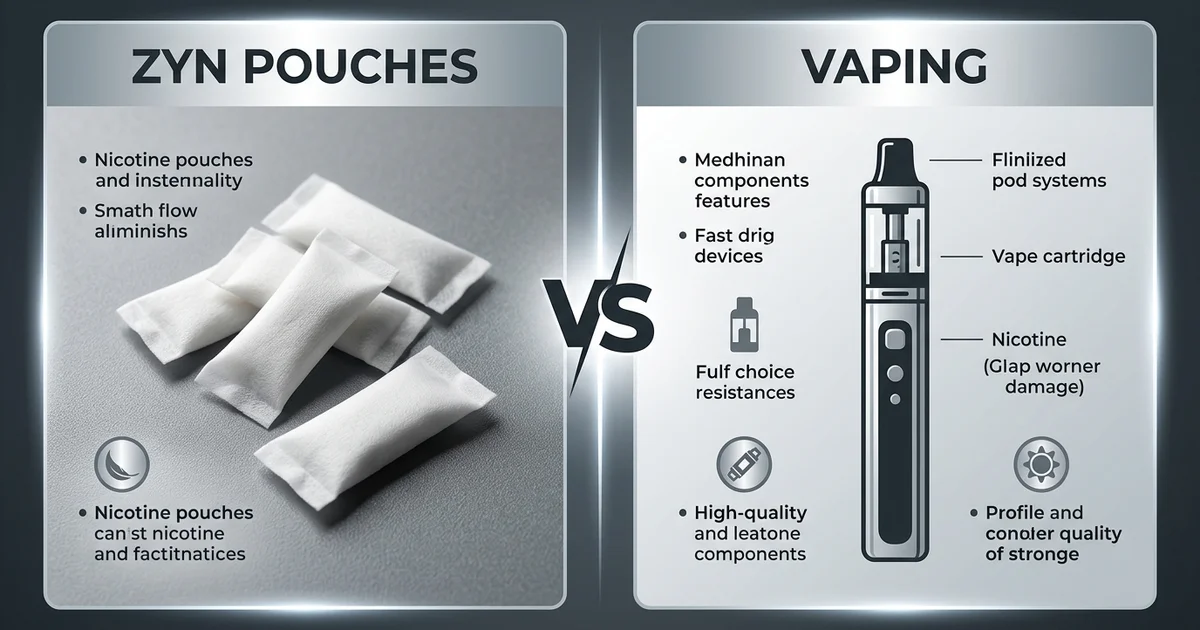
Understanding how Zyn works is the first step in any honest zyn pouches vs vaping comparison. Zyn is a tobacco-free nicotine pouch. You tuck it between your upper lip and gum, and nicotine absorbs through the soft tissue in your mouth (a process called buccal absorption). There's no smoke, no vapor, no device to charge.
Each pouch comes in either 3mg or 6mg nicotine strengths and contains a mix of nicotine salt, food-grade flavorings, sweeteners, and plant-based fibers. The nicotine itself is pharmaceutical-grade, extracted from tobacco plants but processed to remove the leaf material.
The experience lasts about 20 to 40 minutes per pouch. Most users report a quick nicotine buzz within the first few minutes, followed by a gradual taper. It's discreet. No one at your desk, on the subway, or in a meeting will know you're using one.
How Vaping Actually Works
On the other side of the zyn pouches vs vaping equation, vaping heats a liquid (usually containing nicotine, propylene glycol, vegetable glycerin, and flavorings) into an aerosol that you inhale. The nicotine enters your bloodstream through your lungs, which means absorption is fast, often within 10 to 20 seconds.
Nicotine concentrations in vape juice vary wildly. Some disposable vapes pack 50mg/mL of nicotine salt. That's a massive dose compared to Zyn's 3 to 6mg per pouch.
The speed of delivery is part of what makes vaping so habit-forming. Faster absorption means a sharper spike, which your brain learns to crave on a tighter loop. And because a vape is always in your pocket, ready to fire with a single button press, the usage pattern tends toward constant micro-dosing throughout the day rather than discrete sessions.
Zyn Pouches vs Vaping: Health Risks Compared
This is where the zyn pouches vs vaping comparison gets serious. Neither product is "safe" in an absolute sense. But the risk profiles are different.
Lung Health
This is the clearest dividing line in the nic pouches vs vaping debate. Zyn pouches don't involve your lungs at all. Vaping does.
According to the American Lung Association, e-cigarettes contain and emit potentially toxic substances including formaldehyde, acrolein, and acetaldehyde, all of which can cause lung disease. The same source cites a National Academies of Science report that reviewed over 800 studies and concluded that e-cigarette use causes measurable health risks, including moderate evidence of increased coughing and wheezing.
Zyn sidesteps this entirely. No inhalation means no direct lung exposure.
Oral Health
Here's where Zyn has its own problem. Nicotine is a vasoconstrictor, meaning it reduces blood flow to tissues. When you park a nicotine pouch against your gums for 30 minutes at a time, day after day, the consequences add up.
Dentists report that long-term Zyn use can lead to gum irritation, inflammation, and recession, especially when users place pouches in the same spot repeatedly. Receding gums expose tooth roots, increasing sensitivity and the risk of decay.
Vaping isn't great for your mouth either. The heated aerosol dries out oral tissue and can cause inflammation, but the direct, sustained contact of a pouch against your gums is a different kind of stress. This oral health tradeoff is one reason the zyn pouches vs vaping question doesn't have a simple winner.
Chemical Exposure
The American Lung Association notes that vape aerosol contains carcinogens like formaldehyde, heavy metals like lead, and ultrafine particles that penetrate deep into lung tissue. The composition varies wildly between products because e-cigarette manufacturing isn't tightly regulated.
Zyn's ingredient list is shorter and more controlled: nicotine, fillers, pH adjusters, flavorings, and sweeteners. No combustion. No aerosolization. The exposure profile is simpler by a wide margin. On chemical exposure alone, zyn pouches vs vaping tilts in Zyn's favor.
That said, nicotine itself is not harmless. It raises blood pressure, increases heart rate, and is profoundly addictive regardless of the delivery method. A cleaner delivery system doesn't make the active ingredient any less dependency-forming.
The Nicotine Dependency Factor
Both Zyn and vaping deliver nicotine. Both build dependence. This is the part that often gets glossed over in zyn pouches vs vaping "which is safer" debates.
The real question isn't which delivery system is less harmful. It's whether you need nicotine at all. If you're using Zyn or a vape for focus, energy, or stress relief, you're renting those benefits from a molecule that charges interest in the form of withdrawal symptoms, tolerance escalation, and cravings.
Nic Pouches vs. Vaping: The Practical Breakdown
Beyond health, daily usability matters. Here's how nic pouches vs vaping stack up on the factors that affect your actual routine.
| Factor | Zyn Pouches | Vaping |
|---|---|---|
| Nicotine Strength | 3mg or 6mg per pouch | 3mg to 50mg/mL (varies widely) |
| Duration | 20–40 minutes per pouch | Continuous use throughout the day |
| Discretion | Completely invisible | Visible vapor cloud, scent |
| Maintenance | None (single-use pouches) | Charging, coil replacement, refilling |
| Where You Can Use It | Anywhere | Restricted in most indoor spaces |
| Monthly Cost | ~$35–$75 (depending on usage) | ~$50–$120+ (device + juice + coils) |
| Lung Exposure | None | Direct inhalation of heated aerosol |
For people who need discretion at work or in social settings, nic pouches vs vaping isn't even close. Pouches are silent and invisible. Vapes produce clouds, require charging, and are banned in most offices, restaurants, and public transit.
Cost is another factor worth considering in the zyn pouches vs vaping decision. A can of Zyn runs about $4 to $5 and contains 15 pouches. If you use 5 to 10 pouches a day, that's roughly $40 to $75 per month. Vaping costs depend heavily on your setup, but between devices, replacement coils, and juice, most regular vapers spend $50 to $120+ monthly. Neither habit is cheap when you zoom out to a yearly view.
What Neither Option Gives You
Here's the thing both sides of the zyn pouches vs vaping debate have in common: they're nicotine delivery systems. The entire value proposition is feeding a chemical dependency. You get a short burst of alertness and mood elevation, followed by a gradual decline that makes you reach for the next pouch or the next puff.
That cycle isn't performance. It's maintenance. You're not getting sharper. You're just getting back to baseline, over and over.
If what you actually want is sustained focus, clean energy, and sharper cognition without building a dependency, the product category you should be looking at isn't nicotine at all. The better question is: what if you could get the focus benefits without the chemical leash?
A Third Option Worth Considering
Roon is a sublingual pouch built for cognitive performance, not nicotine delivery. It contains zero nicotine and zero tobacco. Instead, it uses a stack of Caffeine (40mg), L-Theanine, Theacrine, and Methylliberine, four compounds that work together to support 4 to 6 hours of sustained focus without jitters, crashes, or tolerance buildup.
Same form factor as a Zyn pouch. Same discretion. But instead of feeding a dependency loop, Roon's formula is designed to support the kind of clean, sustained mental performance that nicotine only pretends to offer.
L-Theanine promotes calm focus without sedation. Theacrine and Methylliberine extend the energy curve without the tolerance buildup that caffeine alone creates. The result is a pouch you can use when you need to lock in, not because your body is demanding its next hit.
If you've been weighing zyn pouches vs vaping and wondering if there's a smarter option, see how Roon compares.
READY TO UNLOCK YOUR FOCUS?
Subscribe for exclusive discounts and more content like this delivered to your inbox.