SOBER CURIOUS MEANING: WHAT IT ACTUALLY IS (AND WHAT IT ISN'T)
Roon Team
Sober Curious Meaning: What It Actually Is (and What It Isn't)
Only 54% of American adults say they drink alcohol. That's the lowest number Gallup has recorded in nearly 90 years of tracking. Something is shifting, and understanding the sober curious meaning helps explain why.
The sober curious meaning is simple: it's the decision to question your relationship with alcohol, rather than drinking on autopilot. You don't have to be an alcoholic. You don't have to swear off booze forever. You just have to start asking yourself why you're reaching for that glass.
The term was coined by author Ruby Warrington in her 2018 book Sober Curious, and it has since grown from a niche idea into a full-blown cultural shift. Here's what the sober curious meaning really involves, why it's gaining traction, and what the science says about the people who are doing it.
Key Takeaways
- Sober curious is not sobriety. The sober curious meaning centers on questioning your drinking habits, not necessarily quitting.
- The movement is driven by data. New research on alcohol's health risks, especially around sleep and cognition, is making people rethink even moderate drinking.
- Nearly half of Americans plan to drink less. A 2025 NCSolutions survey found 49% of U.S. adults intend to cut back on alcohol, up from 34% in 2023.
- Gen Z is leading the charge. 65% of Gen Zers plan to drink less in 2025.
What Does the Sober Curious Meaning Actually Look Like?
Sober curious is a mindset, not a medical diagnosis. According to Penn Medicine, the sober curious meaning is that you "think and reflect more on why, when and how you drink alcohol." The results look different for everyone. Some people cut back to weekends only. Some try Dry January and keep going. Some stop entirely.
The distinction between sober curious meaning and full sobriety matters. Sobriety, as practiced in recovery communities, is often a medical necessity. Sober curiosity is a lifestyle choice. As Psychology Today puts it, the focus is "curiosity, not rigid rules."
That's an important difference. The sober curious movement isn't trying to replace AA or diminish the experience of people in recovery. It's aimed at the much larger group of people who drink out of habit, social pressure, or boredom, and who have started to wonder whether that's actually serving them. Grasping the sober curious meaning helps separate this group from those in clinical recovery.
The Numbers Behind the Sober Curious Movement
This isn't a fringe trend. The data is stark, and it shows the sober curious meaning resonating across demographics.
Gallup's 2025 Consumption Habits survey found that only 54% of U.S. adults say they drink alcohol, the lowest figure in the poll's history going back to 1939. From 1997 to 2023, that number never dipped below 60%. It has now fallen for three consecutive years.
The generational split is even more telling. According to the NCSolutions 2025 survey, 65% of Gen Zers plan to drink less in 2025, compared to 57% of millennials, 49% of Gen Xers, and 30% of boomers. And 39% of Gen Z say they plan to adopt a completely dry lifestyle for the entire year.
The non-alcoholic beverage market has followed suit. Consumers bought 22% more non-alcoholic beer over the 12 months ending November 2024 compared to the prior year. People aren't just drinking less. They're actively seeking alternatives, which is the sober curious meaning in action.
Why People Are Embracing the Sober Curious Meaning
The Health Argument Got Stronger
For decades, the conventional wisdom was that moderate drinking was fine, maybe even beneficial. That narrative has eroded. The former U.S. Surgeon General called for cancer warning labels on alcohol, and the message from public health authorities has shifted toward "no amount of alcohol is risk-free."
That shift is registering. Gallup's data shows that concern about the health effects of moderate drinking is at an all-time high, coinciding directly with the decline in consumption. For many, the sober curious meaning starts right here: with the realization that even casual drinking carries real costs.
Sleep and Cognitive Performance
One of the most tangible benefits people report after reducing alcohol is better sleep. And the science backs them up.
A 2024 systematic review and meta-analysis published in Sleep Medicine Reviews found that alcohol reduces REM sleep duration, even at low doses (roughly two standard drinks). REM sleep is the phase tied to memory consolidation, cognitive function, and emotional regulation. Disrupting it doesn't just make you groggy. It makes you worse at thinking.
The Sleep Foundation notes that alcohol also activates the sympathetic nervous system during the second half of the night, increasing heart rate and fragmenting sleep further. So even if you fall asleep faster after a drink, the quality of that sleep is measurably worse.
For anyone whose performance depends on mental clarity, this is a hard trade-off to justify, and it's a big reason the sober curious meaning keeps spreading.
Social Pressure Is Fading
The stigma around not drinking is dissolving. A decade ago, ordering a club soda at a bar invited questions. Now, most restaurants have a dedicated non-alcoholic section on the menu. The Australian Drug Foundation notes that sober curiosity has grown especially through social media, where younger users normalize alcohol-free socializing.
You no longer need a "reason" not to drink. "I just don't feel like it" has become a perfectly acceptable answer. That cultural shift is what gives the sober curious meaning its staying power.
Sober Curious Meaning vs. Sobriety: Know the Difference
This distinction is worth repeating because it's the most common source of confusion about the sober curious meaning.
| Sober Curious | Sobriety | |
|---|---|---|
| Goal | Examine and reduce drinking habits | Abstain from alcohol entirely |
| Motivation | Lifestyle, health optimization, curiosity | Often medical necessity or recovery |
| Flexibility | You might still drink occasionally | Typically requires full abstinence |
| Community | Informal, social media-driven | Structured support groups (AA, SMART Recovery) |
| Who it's for | Anyone who drinks out of habit | People managing alcohol use disorder |
As Healthline points out, "sober curiosity is all about exploring what works best for you." It's not a replacement for clinical treatment. If you find that you can't control your drinking or experience withdrawal symptoms, that's a different conversation, and one worth having with a doctor.
How to Start Living the Sober Curious Meaning
You don't need a 30-day challenge or a public declaration. Here's what actually works:
- Track your drinks for two weeks. Write down every drink, when you had it, and why. Most people are surprised by the patterns they find.
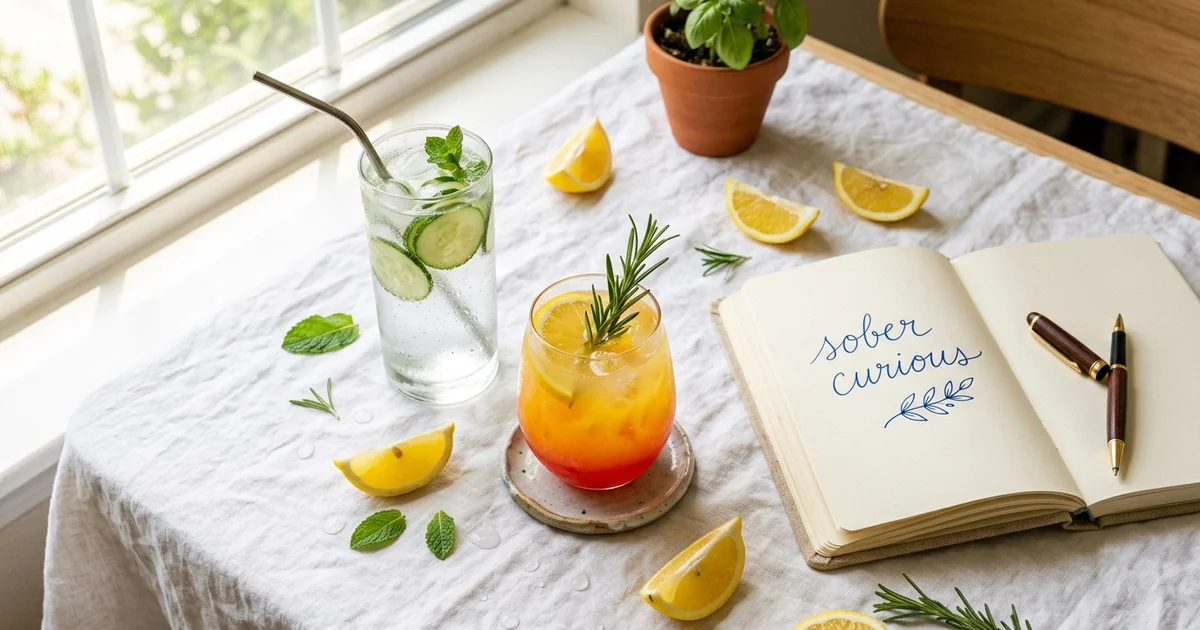
- Replace the ritual, not just the drink. If you always have wine after work, swap it for something with the same sense of ceremony. Sparkling water in a nice glass. A non-alcoholic cocktail. The ritual matters more than the ethanol.
- Notice how you feel. Pay attention to your sleep, your energy the next morning, your mood. The feedback loop is powerful once you start observing it.
- Set boundaries, not ultimatums. "I'm not drinking this week" is easier to stick with than "I'm never drinking again." Small experiments build confidence.
The sober curious meaning comes alive through these small, repeatable actions, not grand gestures.
Clean Focus for the Sober Curious
The sober curious meaning is really about intentionality. It's about choosing what you put in your body based on how it makes you perform, feel, and think, rather than defaulting to whatever's in front of you.
That same principle applies beyond alcohol. If you're rethinking the substances you rely on for energy and focus, it's worth looking at the whole picture. Caffeine from coffee works, but it often comes with jitters and a crash. Nicotine pouches are trending, but they come with an obvious dependency problem.
Roon was built for exactly this kind of thinking. It's a zero-nicotine, sublingual pouch with a targeted stack of caffeine (40mg), L-theanine, theacrine, and methylliberine, designed to deliver 4 to 6 hours of sustained focus without the crash or tolerance buildup. No stimulant debt. No dependency loop. Just clean cognitive support that fits the way you already want to live.
If you're exploring the sober curious meaning and questioning what you drink, maybe it's time to question what you use for focus, too.
READY TO UNLOCK YOUR FOCUS?
Subscribe for exclusive discounts and more content like this delivered to your inbox.