NEURO GUM VS RUN GUM VS CAFFEINE POUCHES: WHICH PORTABLE FOCUS PRODUCT ACTUALLY DELIVERS?
Roon Team
Neuro Gum vs Run Gum vs Caffeine Pouches: Which Portable Focus Product Actually Delivers?
You're standing in line at the airport, or sitting in your car before a 3-hour drive, or staring down a long afternoon of deep work. The Neuro Gum vs Run Gum debate has become the default starting point for anyone shopping for portable focus products. You need focus, and you need it without hauling around a thermos or cracking open another energy drink. But the market has expanded beyond gum. Caffeine pouches from brands like Wip and Grinds now compete for the same pocket space, making the Neuro Gum vs Run Gum comparison only part of the picture.
So which format actually works best? And more importantly, which one gives you the most consistent cognitive boost per dollar?
Here's what we'll cover.
Key Takeaways:
- Neuro Gum delivers 40mg caffeine plus L-Theanine per piece; Run Gum delivers 50mg caffeine plus taurine per piece
- Caffeine gums release their active ingredients quickly, but a portion of that dose gets swallowed with saliva and rerouted through digestion
- Caffeine pouches (Wip, Grinds) offer a pouch format but rely almost entirely on caffeine and B vitamins with no nootropic compounds
- Sublingual pouches with a full nootropic stack address the delivery and formula gaps left by both gums and basic caffeine pouches
Neuro Gum vs Run Gum: The Nootropic Gum That Started the Category
Neuro Gum is probably the most recognized name in the best focus gum conversation. Founded in 2015, it positioned itself as a smarter alternative to energy drinks, and the formula reflects that. Any honest Neuro Gum vs Run Gum breakdown has to start here.
What's Inside
Each piece of Neuro Gum contains:
- 40mg natural caffeine (from green coffee beans)
- L-Theanine (60mg per piece, based on their 2-piece serving data)
- Vitamin B6 and B12
- Zero sugar, zero aspartame
They also sell an Extra Strength version with 100mg caffeine per piece for people who want a stronger hit.
The Case For It
The caffeine and L-Theanine pairing is well-studied. L-Theanine promotes alpha brain wave activity, which smooths out the jittery edge that caffeine alone can produce. If you've ever had coffee that made you wired but scattered, that's what L-Theanine is designed to counteract.
Neuro Gum is also widely available on Amazon and in retail stores, and the branding is clean. For a Neuro Gum review in one sentence: solid formula, good taste, genuinely better than a gas station energy drink.
The Drawbacks
The L-Theanine dose is modest. Most clinical research on L-Theanine's cognitive effects uses doses between 100mg and 200mg. At 60mg per piece, you'd need two or three pieces to reach the range studied in controlled trials. This is a key detail that any thorough Neuro Gum review should mention.
And then there's the delivery problem, which applies to all caffeinated gums. More on that below.
Run Gum: Built for Athletes, Marketed for Everyone
Run Gum was co-founded by Olympic runner Nick Symmonds, and the brand leans hard into the athletic performance angle. To fully understand the Neuro Gum vs Run Gum differences, you need to see how Run Gum's simpler, higher-caffeine approach contrasts with Neuro's nootropic formula.
What's Inside
Each piece of Run Gum contains:
- 50mg caffeine
- Taurine
- Vitamin B6 and B12
- Zero sugar, zero calories
Each pack comes with two pieces, delivering a total of 100mg caffeine per pack, which Run Gum positions as equivalent to one cup of coffee.
The Case For It
If your primary goal is a quick caffeine hit before a run, a workout, or a long commute, Run Gum delivers. 100mg from a two-piece serving is a meaningful dose, and taurine has some evidence supporting its role in exercise performance and reducing perceived fatigue.
The brand also has strong distribution. You'll find it on Amazon, Walmart, and in running specialty stores. For a Run Gum review in brief: it's a straightforward caffeine delivery tool that does what it says.
The Drawbacks
Run Gum has no L-Theanine or any nootropic compound. It's caffeine, taurine, and B vitamins. That's fine for a pre-run energy boost, but for sustained cognitive work (writing, coding, studying), caffeine alone produces a spike-and-crash pattern that taurine doesn't meaningfully smooth out. This is where the Neuro Gum vs Run Gum split becomes clear: one targets focus, the other targets raw energy.
The 100mg per pack dose also leaves less room for stacking with other caffeine sources. If you've already had a morning coffee, adding 100mg on top puts you in a range where jitters become more likely. A balanced Run Gum review has to flag this limitation.
Caffeine Pouches: Wip and Grinds Enter the Chat
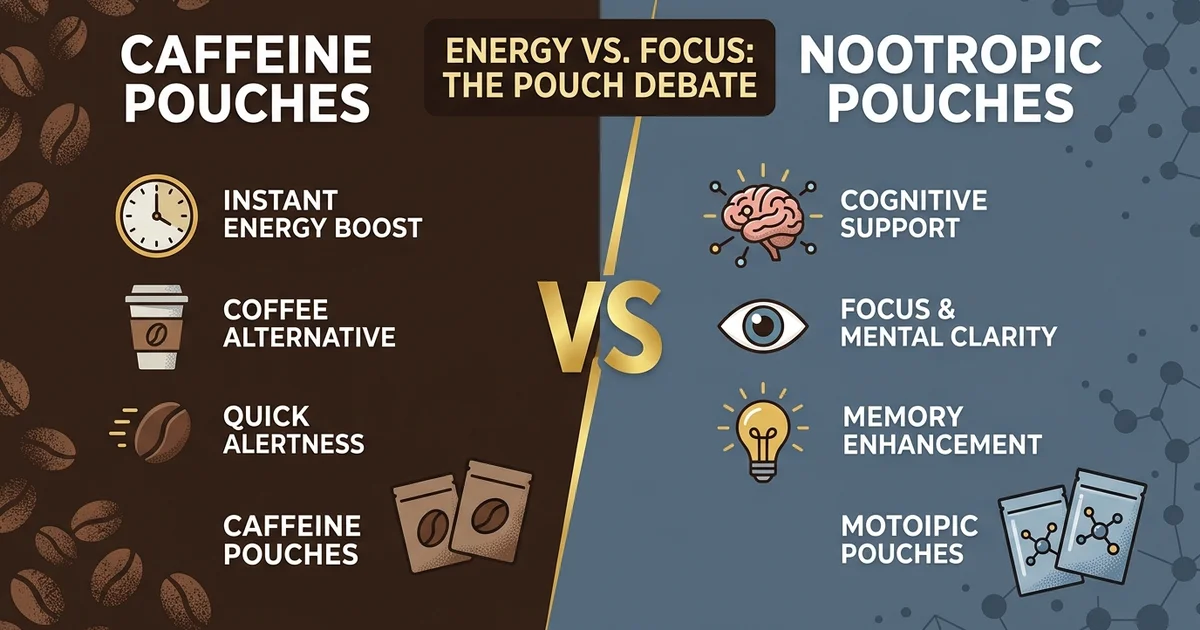
The pouch format has grown fast, partly because of the nicotine pouch trend (Zyn, etc.) training consumers to accept lip pouches as a delivery mechanism. Caffeine pouches borrow that form factor but swap nicotine for caffeine, adding a new dimension to the caffeine gum comparison conversation.
Wip Energy Pouches
Wip launched in 2025 with a clean formula:
- 100mg natural caffeine (from green coffee beans)
- B Vitamins (Niacin, B6, B12)
- Chromium
- Zero sugar, zero calories
Wip positions itself as a portable energy product. The pouches last about 20+ minutes per use, and the absorption happens through the oral mucosa, which is faster than swallowing a pill.
Grinds Coffee Pouches
Grinds takes a different approach. Their pouches contain actual ground coffee, plus an energy blend of caffeine (25-100mg per pouch depending on the variety), taurine, glucuronolactone, and B vitamins. They were originally marketed as a tobacco/nicotine alternative for baseball players and have a loyal following.
The Case For Pouches
The oral absorption route is a real advantage. Instead of swallowing a capsule and waiting 30-45 minutes for your gut to process it, pouches allow caffeine to cross the oral mucosa directly into the bloodstream. This can mean a faster onset of effects, which is why pouches have expanded the Neuro Gum vs Run Gum debate into a broader format question.
The Drawbacks of Current Caffeine Pouches
The formula gap is the issue. Both Wip and Grinds are essentially caffeine + B vitamins. Neither contains L-Theanine, and neither includes any compounds designed to extend the duration of focus or prevent the caffeine crash. They're energy products, not cognitive performance products. Anyone searching for the best focus gum or pouch should weigh this carefully.
Neuro Gum vs Run Gum vs Caffeine Pouches: Head-to-Head Comparison
Here's how the main options in this caffeine gum comparison stack up side by side:
| Feature | Neuro Gum | Run Gum | Wip Pouches | Grinds Pouches |
|---|---|---|---|---|
| Format | Chewing gum | Chewing gum | Oral pouch | Oral pouch (coffee) |
| Caffeine per piece | 40mg | 50mg | 100mg | 25-100mg |
| L-Theanine | Yes (~60mg) | No | No | No |
| Taurine | No | Yes | No | Yes |
| B Vitamins | B6, B12 | B6, B12 | Niacin, B6, B12 | B5, B3, B6, B12 |
| Other Actives | None | None | Chromium | Glucuronolactone |
| Sugar Free | Yes | Yes | Yes | Yes |
| Nicotine Free | Yes | Yes | Yes | Yes |
| Primary Delivery | Buccal + swallowed | Buccal + swallowed | Oral mucosa | Oral mucosa |
| Best For | Focus + mild energy | Pre-workout energy | Quick energy boost | Tobacco alternative |
Looking at this table, the Neuro Gum vs Run Gum distinction is straightforward: Neuro wins on formula depth, Run wins on caffeine dose. But both share the same delivery limitations.
What's Missing From All of These Portable Focus Products
After breaking down each product, a pattern emerges. Every option in this caffeine gum comparison forces you into a trade-off.
The Gum Delivery Problem
Caffeinated gum does absorb faster than capsules. A study published in the International Journal of Pharmaceutics found that caffeine from gum reached peak plasma concentration faster than capsules (44-80 minutes vs. 84-120 minutes). But here's the catch: when the researchers normalized for the amount of caffeine actually released from the gum, the relative bioavailability at the 50mg dose was only about 77% (75% after normalization to the 85% released).
That means a meaningful portion of the caffeine you think you're getting from gum is either still trapped in the gum base when you spit it out, or it's been swallowed with saliva and is now taking the slow digestive route anyway. A separate pharmacokinetic study found that the actual dose of caffeine released by caffeinated gum was roughly 18% lower than the intended dose. This delivery inconsistency affects both sides of the Neuro Gum vs Run Gum equation equally.
The delivery is inconsistent. Some of it absorbs through your cheek lining. Some gets swallowed. Some stays in the gum. You don't really know what percentage you're getting through the fast route.
The Formula Problem
Run Gum and both pouch brands lack any nootropic compounds. Caffeine alone is a stimulant, not a focus tool. It raises alertness, but without L-Theanine or similar compounds, it doesn't do much for the quality of your attention. You feel awake. You don't necessarily feel sharp.
Neuro Gum includes L-Theanine, which is a step in the right direction, but at a dose that falls below what most clinical research has used. And it still has the gum delivery problem. Anyone looking for the best focus gum needs to weigh formula completeness against delivery efficiency.
None of these products include compounds like theacrine or methylliberine, which extend the duration of caffeine's effects without building tolerance. That means with every product on this list, you're looking at roughly 1-3 hours of effect before you need another dose.
The Duration Gap
This is the trade-off nobody talks about in the portable focus products space. A quick hit of caffeine is useful, but most cognitive tasks don't last 90 minutes. They last 3, 4, or 6 hours. A product that peaks fast and drops fast forces you into a cycle of re-dosing, which increases your total caffeine intake and makes crashes more likely. The Neuro Gum vs Run Gum debate rarely addresses this, but it should.
A Different Approach: Sublingual Delivery With a Full Stack
This is where the conversation shifts from "which gum is best" to "is gum even the right format." The Neuro Gum vs Run Gum comparison reveals real limitations in the gum format itself.
Roon is a zero-nicotine sublingual pouch built specifically to address the gaps above. The formula includes 40mg caffeine, L-Theanine, theacrine, and methylliberine, and the sublingual delivery method means the active ingredients absorb through the tissue under your tongue rather than getting partially lost in chewed gum or swallowed saliva.
Here's why that matters for anyone comparing portable focus products:
- Consistent delivery: A sublingual pouch sits in place. You're not chewing, so you're not generating excess saliva that washes active ingredients into your stomach. The absorption route stays the same from start to finish.
- L-Theanine at a functional dose: Paired with caffeine, it supports calm focus rather than wired jitteriness.
- Theacrine and methylliberine: These two compounds are structurally related to caffeine but act on slightly different receptor pathways. Theacrine in particular has shown no evidence of tolerance buildup in repeated use, which means the effect doesn't diminish over days and weeks the way caffeine's does.
- 4-6 hours of sustained focus: The combination of all four compounds is designed to extend the duration of cognitive support well beyond what caffeine alone provides.
Roon isn't trying to be the strongest caffeine product on the shelf. At 40mg, it has less caffeine per serving than Run Gum or Wip. The point isn't to hit you with a massive stimulant dose. It's to deliver a balanced nootropic stack through a route that actually keeps the ingredients where they need to be, absorbing through oral tissue instead of sitting in a wad of gum base. That's what separates it from every product in the Neuro Gum vs Run Gum and caffeine pouch categories.
The Bottom Line on Neuro Gum vs Run Gum
The Neuro Gum vs Run Gum question is a fair starting point, but it's an incomplete one. Both are decent products that do specific things well. Neuro Gum has the better formula. Run Gum has the higher caffeine dose. Caffeine pouches from Wip and Grinds offer a better delivery format but lack any cognitive compounds beyond caffeine and B vitamins.
If what you actually want is sustained focus for real work sessions, the product needs to get three things right: the formula, the dose, and the delivery. The Neuro Gum vs Run Gum comparison highlights the formula and dose trade-offs, but the delivery question is what separates good portable focus products from great ones. Consistent delivery. Complete formula. That's the standard worth holding every product in this category to.
READY TO UNLOCK YOUR FOCUS?
Subscribe for exclusive discounts and more content like this delivered to your inbox.