DRY JANUARY CANNABIS: THE FULL PICTURE BEFORE YOU SWAP ONE SUBSTANCE FOR ANOTHER
Roon Team
Dry January Cannabis: The Full Picture Before You Swap One Substance for Another
You quit drinking for January. Good. But if your dry January cannabis plan is to replace every glass of wine with a THC gummy, you should know what you're actually signing up for.
Dry January cannabis use is surging. A CivicScience survey found that 19% of Dry January participants replaced alcohol with cannabis or CBD products, making it the second most popular substitute after soda and seltzer. One retailer reported a 27% spike in cannabis beverage sales during Dry January compared to the prior year, with tincture sales climbing 57%.
The logic seems clean: alcohol is toxic, cannabis is "natural," and you're still technically sober from booze. But the science behind dry January cannabis tells a more complicated story, and if you're genuinely trying to reset your relationship with substances, swapping one for another may miss the point entirely.
Key Takeaways
- Dry January participation hit 30% of Americans in 2025, with about 1 in 5 participants turning to cannabis as a replacement.
- A Brown University trial found cannabis reduced alcohol consumption by ~25% in a lab setting, but researchers stopped short of recommending it as a strategy.
- Dry January cannabis carries its own health risks, including cardiovascular concerns and a 10-20% dependency rate among daily users.
- True cognitive clarity doesn't require trading one psychoactive substance for another.
Why Dry January Cannabis Use Is Exploding
The numbers behind Dry January itself are hard to ignore. According to NCSolutions data reported by The Educated Patient, 49% of Americans planned to drink less alcohol in 2025, a 44% increase from 2023. Dry January participation specifically grew by 36% year over year.
Gen Z is driving this. The Educated Patient reports that 65% of Gen Z planned to drink less in 2025, with 39% committing to a fully dry lifestyle. But "dry" doesn't always mean substance-free, and that's where dry January cannabis enters the picture.
Enter "High January." The term has gained traction as cannabis companies market directly to the Dry January crowd. Fox News reported that around 15% of Americans are current cannabis users, with more than 22% having used it in the past year. Cannabis beverage brands, in particular, have positioned their products as the "healthier" social drink, targeting the exact demographic that just put down a beer.
The appeal of dry January cannabis makes sense on the surface. Cannabis doesn't cause hangovers. It doesn't carry the liver toxicity of alcohol. And THC seltzers look and feel like the non-alcoholic drinks already popular during Dry January.
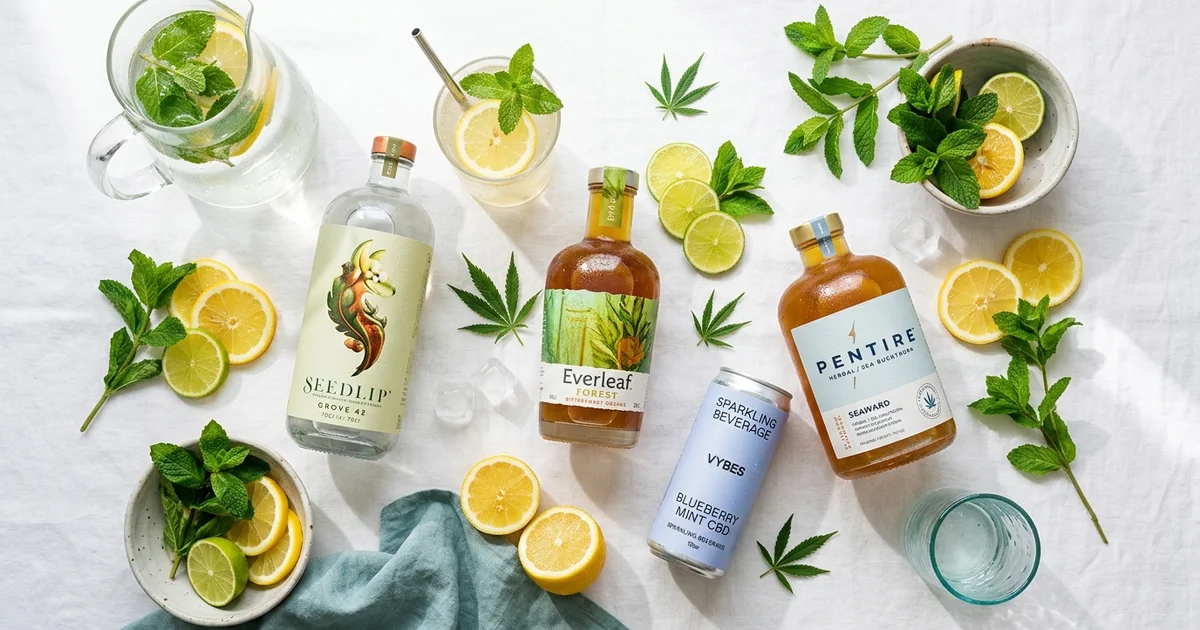
The marketing is smart, too. Cannabis beverage brands frame their products alongside kombucha and sparkling water, not alongside joints and bongs. The packaging is clean. The dosing is precise. The vibe is "wellness," not "getting high."
But "less harmful than alcohol" is a low bar. And clearing it doesn't make something harmless.
What the Science Actually Says About Dry January Cannabis Substitution
The most rigorous study on this question came from Brown University in 2025, published in the American Journal of Psychiatry. It was the first randomized, placebo-controlled trial to test whether cannabis directly changes alcohol consumption.
The result: participants who used cannabis drank about 25% less in a controlled lab setting. Cravings dropped too.
But the researchers were explicit about the limits. Jane Metrik, the Brown professor who led the study, told NPR that the team is "not ready to tell people seeking treatment for alcohol, go ahead and substitute cannabis, and it will work out for you." The study measured short-term effects in a lab. Real-world, long-term outcomes for dry January cannabis users remain an open question.
There's also a catch the headlines tend to skip. The Brown team found that the risk of cannabis actually increasing drinking was higher for people who tend to combine the two substances in social settings. If your version of dry January cannabis means THC gummies at a bar while your friends drink, the substitution effect may not hold.
The Cardiovascular Risk Nobody Talks About
Here's where the dry January cannabis narrative of "safer than alcohol" gets complicated.
A meta-analysis presented at the American College of Cardiology's 2025 conference pooled data from 12 studies covering over 75 million people. All participants were under 50 and free of major cardiovascular conditions at baseline. The findings:
| Risk Factor | Increase Among Cannabis Users |
|---|---|
| Heart attack | 6x higher risk |
| Ischemic stroke | 4x higher risk |
| Heart failure | 2x higher risk |
A separate American Heart Association analysis of 430,000 U.S. adults found that cannabis use was associated with increased risk of heart attack and stroke independent of tobacco use, with more frequent use linked to higher odds.
This doesn't mean a single gummy will give you a heart attack. Dose, frequency, and method of consumption all matter. Smoking carries different risks than edibles. Occasional use is different from daily use.
But the data should give pause to anyone whose dry January cannabis plan involves daily use throughout the month, or beyond. Especially if you're under 50 and assumed your age made you bulletproof.
Dependency: The Other Side of "It's Not Addictive"
The claim that cannabis isn't addictive is outdated. It's less addictive than alcohol or nicotine, yes. But according to research cited by Wikipedia's review of clinical literature, 10-20% of daily cannabis users develop dependence. Cannabis withdrawal, affecting about half of those in treatment for cannabis use disorder, can include irritability, anxiety, insomnia, and depression.
Cleveland Clinic notes that regular use builds both tolerance (needing more to feel the same effect) and physical dependence. If you stop suddenly after weeks of daily dry January cannabis use, withdrawal symptoms are real, even if they're milder than alcohol withdrawal.
The irony is thick. You started Dry January to break a pattern with one substance. Finishing the month dependent on another isn't the win it looks like.
And the timeline matters. January is 31 days. That's enough for tolerance to build and for withdrawal symptoms to appear when February hits. If your dry January cannabis habit takes you from zero to daily use for a month, you may find that stopping feels harder than you expected.
The "California Sober" Question
"California sober," the practice of quitting alcohol but keeping cannabis, has become a lifestyle identity. And for some people, it works. If your primary issue is alcohol, and cannabis use stays occasional and controlled, the harm reduction math may check out.
But harm reduction and optimization are different goals. And most people exploring dry January cannabis aren't just trying to reduce harm. They want to feel better. Think sharper. Wake up without regret.
Cannabis still impairs working memory, reaction time, and executive function while you're under its influence. Even the next morning, regular users show measurable cognitive deficits in attention and processing speed. If you're doing Dry January because you want to think more clearly, sleep better, and perform at a higher level, daily cannabis use works against every one of those goals.
A Psychology Today analysis put it well: substituting alcohol with THC beverages may reduce some alcohol-related harms like hangovers and liver damage, but it introduces new risks including cognitive and behavioral effects, cardiovascular concerns, and for some, addiction. That's the full picture of dry January cannabis that most marketing won't show you.
What Actually Works for a Clean January
If the goal is genuinely resetting your brain and body, the most effective approach is also the simplest: don't replace the substance. Replace the ritual. The dry January cannabis swap just trades one crutch for another.
The reason people reach for a drink (or a gummy) at 6 PM isn't usually about the chemical. It's about the signal. The shift from "work mode" to "off mode." The social lubricant. The thing you do with your hands.
Here's what the research supports for a real reset:
- Fix your sleep first. A BMJ Open study cited by The Educated Patient found that regular drinkers who abstained for 30 days reported better sleep, weight loss, and more energy, plus lower cholesterol and blood pressure. Cannabis can actually disrupt REM sleep, undermining one of the biggest benefits of going dry.
- Move your body. Exercise produces endocannabinoids naturally. Your body already has the hardware. Use it.
- Find a non-psychoactive ritual. This is where most people fail, and where dry January cannabis becomes tempting. They remove the substance but keep the void. You need something in the glass, something in the routine, that isn't just water and willpower.
- Address the real trigger. Most evening substance use is stress-driven. If you're reaching for a drink or a gummy because your nervous system is fried from work, the fix isn't a different chemical. It's a better off-switch.
Clean Focus for the Sober Curious
The sober curious movement isn't really about alcohol. It's about questioning whether you need a psychoactive crutch to get through the day, to be social, to focus, to relax. And dry January cannabis is just another version of that crutch.
That question deserves a better answer than "just use a different psychoactive substance."
Roon was built for exactly this space. It's a zero-nicotine sublingual pouch with 40mg of caffeine, L-Theanine, Theacrine, and Methylliberine, designed to deliver 4-6 hours of sustained focus without jitters, crashes, or tolerance buildup. No psychoactive fog. No dependency risk. No cardiovascular red flags.
If Dry January taught you that you think better without alcohol, Roon is what comes next. Skip the dry January cannabis detour. Just clean, sustained cognitive performance for people who've decided they don't need to be altered to be sharp.
READY TO UNLOCK YOUR FOCUS?
Subscribe for exclusive discounts and more content like this delivered to your inbox.